








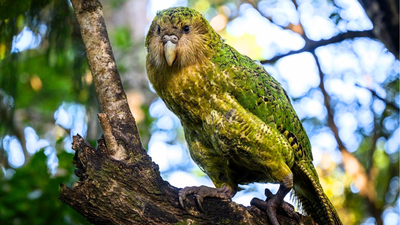
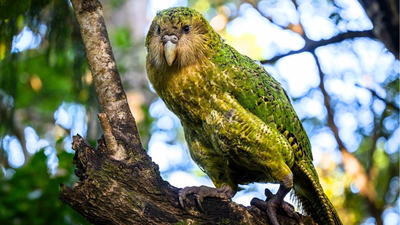
New Zealand’s critically endangered kākāpō, the world’s heaviest parrot, has reached a remarkable conservation milestone after decades of intensive efforts to pull the species back from the brink of extinction. Its population has climbed to 325 birds after 90 chicks from the 2026 breeding season were officially added to the count, marking the highest population recorded during the modern recovery programme. The achievement is particularly significant because the Kākāpō Recovery Programme began in 1995 with just 51 birds, including only 20 females. The latest increase also means the species is believed to have crossed 300 birds for the first time in around 75 years, offering a major sign that one of New Zealand’s most threatened native species is slowly returning from the edge.
From 51 birds to 325 after decades of conservation
The kākāpō’s dramatic turnaround has been built over more than three decades of intensive conservation involving New Zealand’s Department of Conservation, Ngāi Tahu, scientists, rangers, volunteers and other partners. When the recovery programme began in 1995, only 51 kākāpō were known to remain, with the population consisting of just 31 males and 20 females. Conservationists moved the surviving birds to predator-free offshore islands and established intensive monitoring and breeding programmes to protect every individual. Today, the population stands at 325, representing an increase of more than six times from the programme’s starting point and providing one of New Zealand’s clearest examples of how sustained species protection can reverse a seemingly catastrophic decline.
Introduced predators drove the population towards extinction
The kākāpō once lived across much of New Zealand, but its numbers collapsed following the arrival of humans and introduced mammals. Unlike many birds, the kākāpō is flightless and spends much of its time on the ground, making it extremely vulnerable to predators such as cats, rats and stoats. The species also evolved in an environment without mammalian predators, leaving it poorly equipped to deal with animals introduced from elsewhere. Hunting and habitat loss added further pressure. By the late 20th century, the remaining population had been reduced to such a small number that extinction appeared increasingly likely. The discovery of the last known population on Stewart Island in the 1970s and 1980s ultimately led conservationists towards a strategy centred on removing birds from predator-infested mainland habitats.
Every surviving bird became part of the recovery effort
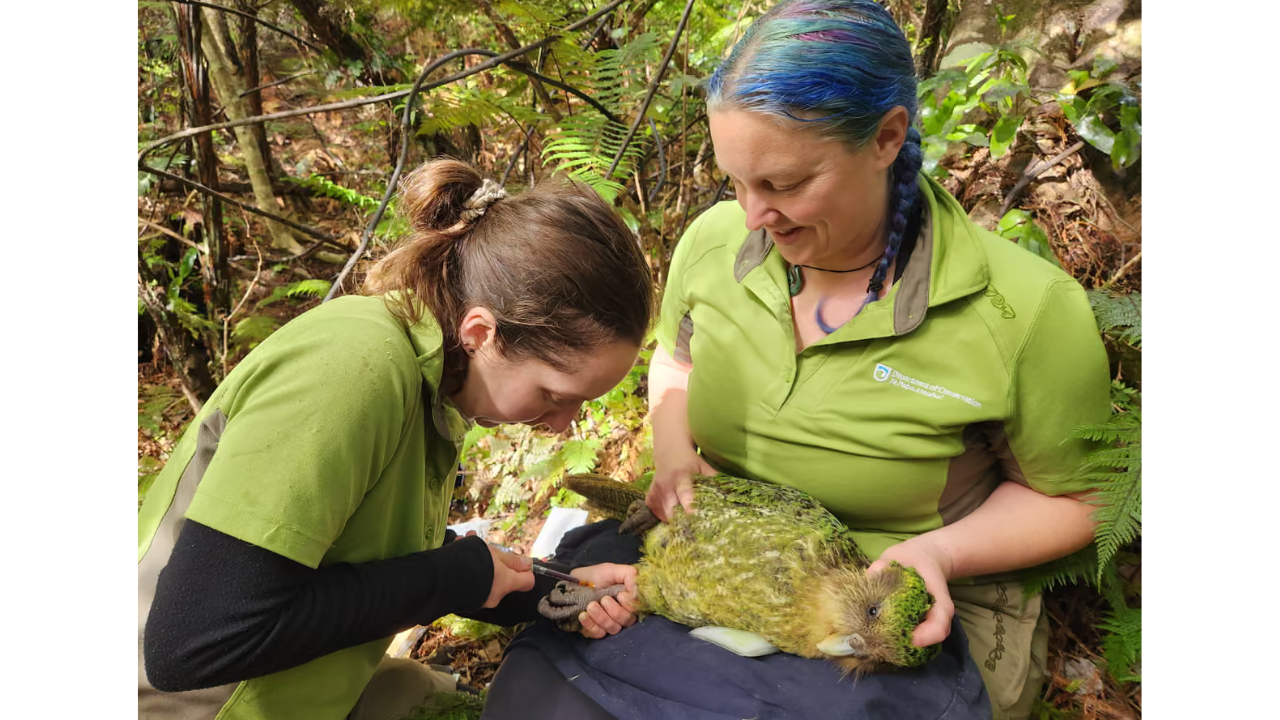
With so few kākāpō remaining, conservationists could not afford to leave their survival to chance. The surviving birds were transferred to predator-free islands where they could live without the constant threat of introduced mammals. Each bird is individually monitored, allowing experts to track its health, movements, breeding behaviour and reproductive success. The intensive approach has also allowed conservationists to make decisions about which birds should breed and how eggs and chicks should be managed. Because the population descended from a very small number of survivors, maintaining and improving genetic diversity has become another important part of the programme. The effort has therefore involved not simply protecting habitat but carefully managing an entire population in an attempt to rebuild a viable species.
The world’s heaviest parrot cannot breed every year
Kākāpō recovery is particularly challenging because the birds have an unusual reproductive cycle. They generally breed only when rimu trees produce large quantities of fruit, meaning breeding seasons typically occur every two to four years rather than annually. The 2026 season followed a four-year gap and was triggered by strong rimu fruiting across the islands where the population lives. Mating began in late 2025, with conservationists expecting the abundant food supply to create favourable conditions for reproduction. This natural dependence on rimu mast years means that population growth can come in sudden bursts rather than through steady annual increases, making every successful breeding season especially important to the recovery programme.
A record 90 chicks changed the population
The favourable breeding conditions produced an extraordinary result. Ninety chicks from the 2026 season were officially added to the population on 1 September after the youngest surviving chick reached 150 days of age and was considered sufficiently independent to be included in the official count. The 90 chicks represent a record for a single breeding season under the modern recovery programme. The scale of the achievement becomes even clearer when compared with the programme’s early years, when it took 16 years to produce the same number of chicks. Their addition took the official population to 325, making 2026 a landmark year for a species that had been reduced to only 51 birds when the recovery programme began.
Scientists have had to intervene at almost every stage
The record breeding season was not simply the result of favourable conditions. Kākāpō reproduction can be affected by infertility, unsuccessful hatching and other biological challenges, while the species’ small population creates additional genetic concerns. Conservationists closely monitor nests and eggs, move eggs or chicks between nests when necessary and provide specialised care to improve survival. The programme has also adopted new technologies to make intervention more effective. A rapid DNA test developed in New Zealand can determine the sex of newly hatched kākāpō within about an hour, helping conservationists make earlier decisions about the care and management of chicks. Such interventions have been crucial in turning every possible breeding opportunity into population growth.
Conservationists are now trying to reduce human intervention
The success of the programme is creating an unusual new challenge. As the population becomes larger and healthier, conservationists want kākāpō to become increasingly capable of surviving and reproducing without constant human assistance. During the 2026 breeding season, the recovery team experimented with reducing some of the intensive management, including fewer checks of eggs and chicks, less supplementary feeding in some circumstances and greater use of remote monitoring. The aim is not to abandon intervention but to gradually understand how the birds respond when given more opportunities to behave naturally. This marks an important shift in the programme from emergency population rescue towards building a population that can ultimately become more self-sustaining.
More birds mean a bigger need for safe habitat
Despite the dramatic increase, the kākāpō remains critically endangered and its future still depends on maintaining predator-free habitat. The surviving population is concentrated on protected offshore islands, including Whenua Hou/Codfish Island, Pukenui/Anchor Island and Te Kāhaku/Chalky Island, as well as a fenced mainland sanctuary. As the number of birds grows, conservationists will need to provide enough secure habitat for the expanding population. Restoring larger areas of the species’ former range is therefore becoming increasingly important. One long-term ambition is to return kākāpō to Rakiura/Stewart Island, where the species historically lived but where introduced predators remain a major obstacle.
The comeback is remarkable but the work is not over
The journey from 51 birds in 1995 to 325 today represents a dramatic reversal for one of the world’s most unusual parrots. The latest breeding season has demonstrated that decades of predator control, scientific intervention, genetic management and intensive monitoring can produce substantial gains even when a species has been reduced to a tiny remnant population. Yet 325 birds is still an extremely small population for a wild species, and kākāpō remain dependent on carefully protected habitat and continued conservation management. The next stage will be to turn this numerical success into a genuinely secure population capable of expanding into larger areas of its former range. For now, however, the addition of 90 chicks provides a powerful measure of just how far the species has travelled from the 51 birds that remained three decades ago.