




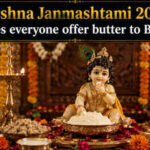






Every household that keeps a small idol of Bal Gopal, the child form of Krishna, knows the ritual by instinct. A little butter goes on his palm before anything else is offered. Nobody asks why. It is simply what you do. But sit with that instinct, and it starts to look strange. Of all the things a god who holds the universe together might be given, why butter—this soft, perishable, faintly ordinary thing—rather than gold or grain?The answer sits in a set of stories from Vraja, the pastoral region around what is now Mathura and Vrindavan, where Krishna spent his childhood among cowherds. They describe a child stealing butter from his neighbours’ homes, again and again, until the theft became the defining image of his early life. Devotees call him Makhan Chor, the butter thief. The name is affectionate precisely because the crime was never really a crime.
What a pot of butter was worth in Vraja
The Bhagavata Purana, in its tenth canto, describes this world in some detail. It was a cattle economy, and a herd’s value came through in milk, curd, and, above all, navaneeta, the fresh, hand-churned white butter made each morning before the day’s heat set in.A gopi’s pot of fresh churned butter was not pocket change. It meant hours of labour at dawn, pulling a wooden churner on a rope until the cream separated. When young Krishna crept into these homes and ate or gave away what he found, the complaints to his mother, Yashoda, were not merely performance. Something real had gone missing from the larder.That is what makes the theft mean something. The child stealing it was, according to the same texts, the source from which the cows, the rain, and the milk itself came to be. He owned everything already, so his taking it filled no lack. He was accepting an offering before it had been formally made, claiming what the gopis’ love had already set aside for him without their knowing it.Butter stood for the softest part of that devotion, and stealing it was Krishna’s way of laying claim to their hearts rather than their dairy.
The rope that was always two fingers short
One version of this mischief closes the loop. Yashoda, worn down by complaints, finally catches her son with butter on his face and decides to tie him to a mortar—the episode that gives Krishna the name Damodara, “one bound at the waist.”But the rope will not reach. She fetches more, joins it, tries again, and finds it still short by what tradition calls two fingers. She keeps failing until she stops trying to bind him by force and simply keeps trying, out of love.Only then does the rope close.Commentary reads the two missing fingers as the devotee’s effort and the Lord’s grace, neither sufficient alone. Power could not tie that knot. Only persistence, offered without hope of winning, finally did.
Why the churn matters more than the dairy
This is why the tradition is particular about which butter reaches the plate. Bal Gopal is not offered a spoonful from a shop-bought tub. Households that take the ritual seriously churn or seek out white makhan by hand, pale and grainy rather than pasteurised and smooth.The point is not purity for its own sake. The object should still carry the labour and intention behind it—the quality that made the gopis’ butter worth stealing. A factory-made block cannot be Makhan Chor’s butter in more than name.Around it sits the rest of the offering. Makhan mishri, butter mixed with coarse rock sugar, is said to match Krishna’s own childhood taste and needs no cooking, only care. Families also place dhaniya panjiri, a coriander-and-nut mixture favoured in north Indian homes, and charnamrit, made from milk, curd, honey, ghee, and sugar and used in the ritual bath.None carries the scriptural weight of the butter itself. Recipes shift by region and household, and much of what fills the thali is inherited custom, not Puranic instruction. There is no dishonesty in admitting that.There is also a season behind all this. Janmashtami falls in Bhadrapada, the month closing out the monsoon, when digestion is traditionally held to be weak and fresh dairy fat is considered gentler on the body than heavier festival food. That logic is real, but it is not why the butter is there. It only explains why the timing suits it.What remains, once the rope is tied and the sugar stirred in, is a small pale mound on a child god’s palm, standing in for every pot a gopi ever hid on a high shelf and every knot a mother ever tied not quite tight enough.