






Headlines
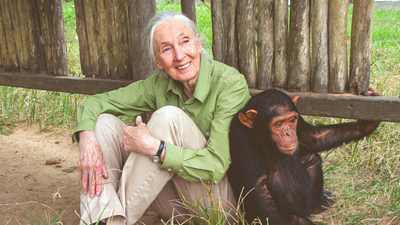
Quote of the day by Jane Goodall: "Every individual matters. Every individual has a role to play. Every individual..."

Quote of the day by Jane Goodall: “Every individual matters. Every individual has a role to play. Every individual…” |

Jane Goodall spent decades studying chimpanzees in the wild before becoming one of the world’s most recognisable voices for wildlife conservation and environmental protection. Her work changed how scientists understood chimpanzee behaviour and helped demonstrate the importance of protecting animals and their habitats. One of her most widely shared messages is simple: “Every individual matters….
Read More
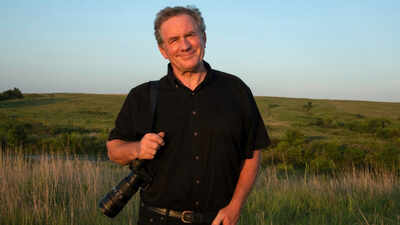
In 2006, Joel Sartore began photographing one animal at a time; 18,000 species later, his Photo Ark has become a global conservation movement fighting to save wildlife from extinction

Photography To Protect Endangered Species: In 2006, Joel Sartore began photographing one animal at a time; 18,000 species later, his Photo Ark has become a global conservation movement fighting to save wildlife from extinction

Joel Sartore started the project with a simple but powerful idea: to photograph animals one species at a time, creating a visual record before they are gone. (Image: Instagram/joelsartore) In a world where species can disappear before most people even know they exist, photographer Joel Sartore has spent two decades making sure wildlife is seen….

Read More
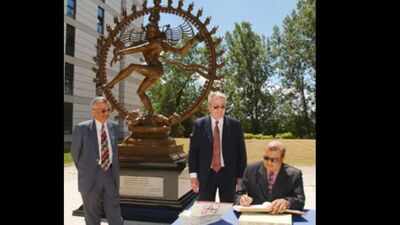
CERN, where scientists smash particles at nearly the speed of light, has a 2-metre Shiva Nataraja statue outside; why India gifted the cosmic dancer to the physics lab in 2004

CERN, where scientists smash particles at nearly the speed of light, has a 2-metre Shiva Nataraja statue outside; why India gifted the cosmic dancer to the physics lab in 2004

Lord Shiva Statue Unveiled (CERN official) For those who don’t know, CERN is Conseil Européen pour la Recherche Nucléaire (European Council for Nuclear Research). It is the world’s largest particle physics laboratory near Geneva, Switzerland (near Franco-Swiss border). It is the lab where scientists accelerate particles to almost the speed of light. But beyond this…

Read More
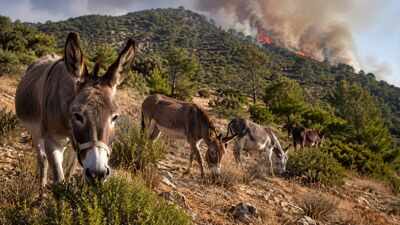
A Spanish woman turned 18 rescued donkeys into a wildfire-fighting team, with the animals grazing for up to 7 hours a day; her unusual conservation idea is helping prevent fires before they start

A Spanish woman turned 18 rescued donkeys into a wildfire-fighting team, with the animals grazing for up to 7 hours a day; her unusual conservation idea is helping prevent fires before they start

In the sun-drenched hills of Andalusia, Spain, an unlikely team of firefighters is making headlines. They don’t carry hoses, wear helmets, or race to blazes in red trucks. Instead, they have four legs, long ears and a simple mission: eat grass. Meet the “firefighting donkeys” of Doñana National Park, a group of 18 rescued animals…

Read More
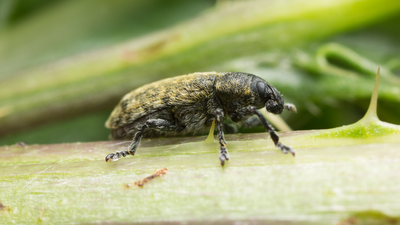
Between 1969 and 1972, the US released a European weevil to fight invasive musk thistle; it later attacked at least 25 native thistles, including rare and endangered species

Between 1969 and 1972, the US released a European weevil to fight invasive musk thistle; it later attacked at least 25 native thistles, including rare and endangered species

Rhinocyllus conicus (Image Credit: Canva) A biological control programme launched in the United States more than five decades ago has become a cautionary example of how attempts to manage invasive species can produce unexpected ecological consequences. According to a USDA Forest Service assessment of invasive species in the Southwest, the thistle seedhead weevil (Rhinocyllus conicus)…

Read More
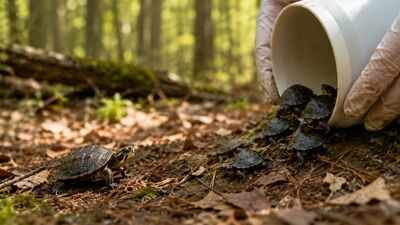
In 2011, a tiny turtle disappeared into the Massachusetts wild. 15 years later, her daughters were released into the wild

In 2011, a tiny turtle disappeared into the Massachusetts wild. 15 years later, her daughters were released into the wild |

In 2011, Ivy was released into a Massachusetts marsh as a tiny seven-gram Blanding’s turtle after spending her first months in human care. Then she disappeared. For more than a decade, there was no confirmed sign of the turtle, leaving conservationists with no way of knowing whether she had survived. According to the Commonwealth of…

Read More
Scientists create a brain-to-brain network that lets people communicate without words, offering a breakthrough for human communication

Scientists create a brain-to-brain network that lets people communicate without words, offering a breakthrough for human communication |

Brain-to-Brain communication between humans. Image Credit: PASIEKA/Science Photo Library/Corbis Scientists have demonstrated direct brain-to-brain communication using a system that transmitted information between people without speech, typing or physical gestures. The research led to ‘BrainNet,’ a system that connected three people and allowed them to collaborate on a task using brain signals. Electrical activity was recorded…

Read More
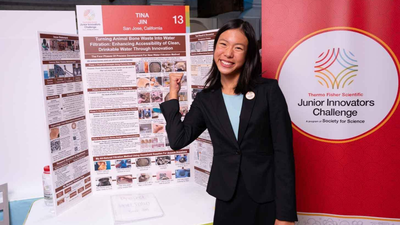
Meet Tina Jin, the 15-year-old Massachusetts student who turned animal bones into a new material for cleaning polluted water

Meet Tina Jin, the 15-year-old Massachusetts student who turned animal bones into a new material for cleaning polluted water |

A 15-year-old Massachusetts student is exploring an unusual way to make polluted water cleaner: using discarded animal bones. Tina Jin, a student at Phillips Academy in Andover, developed a filtration system that uses ground cow, lamb or pig bones arranged in multiple layers to target different contaminants in water. Her research focuses on places where…

Read More
Meet Zainab Nathani, the Illinois student who designed a material that can pull water from humid air using sunlight

Meet Zainab Nathani, the Illinois student who designed a material that can pull water from humid air using sunlight |

Zainab Nathani, a high school junior from Niles, Illinois, has designed a material that can pull drinkable water straight out of humid air, powered entirely by sunlight. Studying at Niles Township West High School, she built her project around emulsion-templated composite biogels, porous, bio-based structures engineered to trap moisture from the atmosphere and release it…

Read More
Coffee beans found in Civet poop used to make one of the world’s most expensive Kopi Luwak coffee which costs thousands of dollars per kilogram

Coffee beans found in Civet poop used to make one of the world’s most expensive Kopi Luwak coffee which costs thousands of dollars per kilogram |

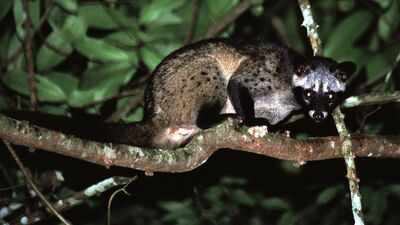
Asian palm civet. Image Credit: Bernard DUPONT/Wikipedia Kopi luwak is one of the world’s most unusual coffees because its production begins inside the digestive system of an animal. The coffee is made from beans eaten and later excreted by the ‘Asian palm civet,’ a small mammal found across parts of South and Southeast Asia. The…

Read More