









Headlines
Meet Finnegan McGill, the 18-year-old Arizona student who spent four years building an AI device that can identify birds from their calls and pinpoint where they are

Meet Finnegan McGill, the 18-year-old Arizona student who spent four years building an AI device that can identify birds from their calls and pinpoint where they are |

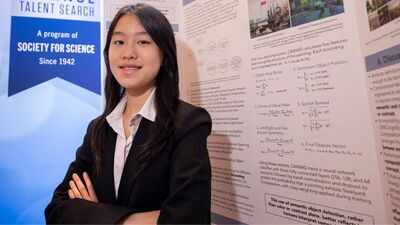
Finnegan McGill. Image Credit: Chris Ayers/Society for Science Finnegan McGill has spent more than four years turning a concern about declining bird populations into a working piece of technology. This 18-year-old student from Tucson, Arizona, developed a device known as ‘A-BiRD’ (Automated Bird Recognition Device) which could help in identifying birds by their calls and…
Read More
Meet Ankan Das, the 15-year-old Florida student who built a shape-shifting robot that crawls on Moon soil and squeezes through tight spaces

Meet Ankan Das, the 15-year-old Florida student who built a shape-shifting robot that crawls on Moon soil and squeezes through tight spaces |

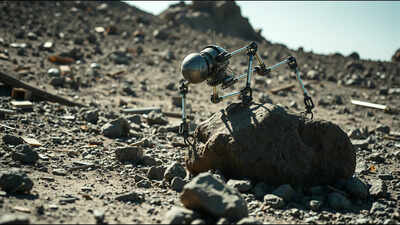
Representative Image of a tensegrity robot navigating obstacles during a search-and-rescue mission (AI-generated image) Ankan Das is a 15-year-old sophomore at Oviedo High School in Florida, but his latest science-fair project looks more like something from a robotics laboratory than a school classroom. For his Regeneron International Science and Engineering Fair project, Das built a…

Read More
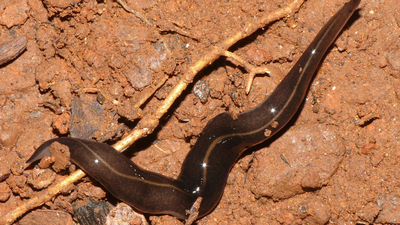
In the 1990s, a predatory flatworm was released in Samoa to control giant African snails; it later became linked to the decline and extinction of native island snails

In the 1990s, a predatory flatworm was released in Samoa to control giant African snails; it later became linked to the decline and extinction of native island snails

In the 1990s, a predatory flatworm was released in Samoa to control giant African snails An aggressive predatory flatworm introduced to Pacific islands during the 1990s to control agricultural pests has pushed native land snail species toward extinction, turning a planned biological control program into an ecological disaster. The New Guinea flatworm (Platydemus manokwari) was…

Read More
In 1937, Australian scientists released infected rabbits on an island to test a virus that would later transform rabbit control across the continent

In 1937, Australian scientists released infected rabbits on an island to test a virus that would later transform rabbit control across the continent |

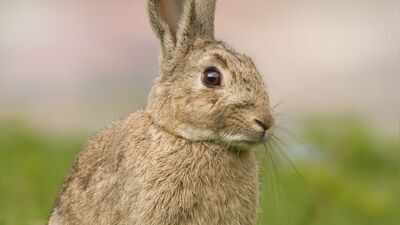
A European rabbit in Tasmania. Image Credit: JJ Harrison/Wikipedia In 1937, Australian scientists took an unusual step in the fight against one of the country’s most destructive pests known as ‘rabbits.’ They released rabbits carrying ‘myxoma virus’ on Wardang Island, off South Australia, to see whether the disease could spread naturally. The experiment was part…

Read More
Meet Ella Lu, the 17-year-old North Carolina student who taught AI to recognise how Impressionist painters arranged objects in their paintings

Meet Ella Lu, the 17-year-old North Carolina student who taught AI to recognise how Impressionist painters arranged objects in their paintings |

Ella Lu. Image Credit: Chris Ayers/Society for Science Ella Lu, a 17-year-old student from Chapel Hill, North Carolina, has found a way to bring two different interests of ‘art’ and ‘computer science’ together. As a senior at the North Carolina School of Science and Mathematics(NCSSM), Lu developed a system that can study how objects are…

Read More
In 1885, New Zealand released European hedgehogs as garden pest killers; 140 years later, DOC calls them a major threat to native wildlife and one can empty an endangered tern colony of nesting birds

In 1885, New Zealand released European hedgehogs as garden pest killers; 140 years later, DOC calls them a major threat to native wildlife and one can empty an endangered tern colony of nesting birds

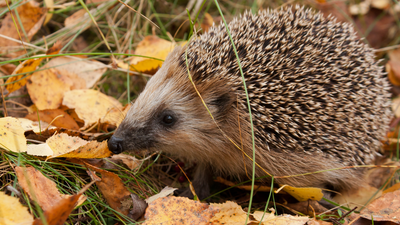
European hedgehog (Image Credit: Canva) What was once seen as a useful garden helper in New Zealand has become an unexpected threat to some of the country’s most vulnerable wildlife. European hedgehogs were deliberately introduced to New Zealand in the 19th century, with acclimatisation societies releasing them in the hope that they would help control…

Read More
Dutch plant turns 420,000 tonnes of poultry manure into renewable electricity for 45,000 households while recycling the leftover ash into fertiliser

Dutch plant turns 420,000 tonnes of poultry manure into renewable electricity for 45,000 households while recycling the leftover ash into fertiliser |

A Dutch plant is turning a huge agricultural waste stream into renewable electricity and fertiliser. BMC Moerdijk in the Netherlands processes around 420,000 tonnes of poultry manure each year, using thermal conversion to generate electricity for the farms supplying the manure and enough additional power for around 45,000 households. The process does not end after…

Read More
Quote of the day by Pythagoras: “Of all the rest of mankind, make him your friend who distinguishes himself by his virtue”

Quote of the day by Pythagoras: “Of all the rest of mankind, make him your friend who distinguishes himself by his virtue” |

Pythagoras is best known today for the mathematical theorem that bears his name, but the ancient Greek thinker was also associated with a broader philosophical tradition that explored morality, discipline, friendship and the pursuit of a virtuous life. One saying attributed to him offers a timeless reflection on the people we choose to keep close:…

Read More
Quote of the day by Florence Nightingale: “So never lose an opportunity of urging a practical beginning, however small”

Quote of the day by Florence Nightingale: “So never lose an opportunity of urging a practical beginning, however small” |

Florence Nightingale, widely remembered as the “Lady with the Lamp”, became one of the most influential figures in the history of nursing and healthcare. Born in 1820, she challenged the expectations placed on women of her time and devoted her life to improving the treatment of sick and injured people. Her work during the Crimean…

Read More
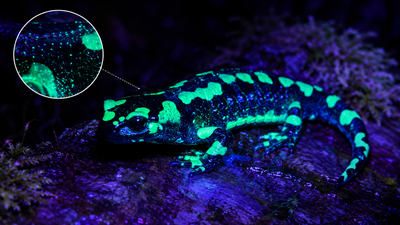
Scientists found fire salamanders glow blue-green under ultraviolet light, with their skin glands producing fluorescent secretions

Scientists found fire salamanders glow blue-green under ultraviolet light, with their skin glands producing fluorescent secretions |

At first glance, the fire salamander appears much as it always has: black skin broken by irregular yellow markings, a pattern long associated with the species’ chemical defences. But under ultraviolet light, that familiar appearance changes. According to the 2026 study published in the Royal Society, titled ‘Glandular biofluorescence in fire salamanders (Salamandra salamandra): first…

Read More
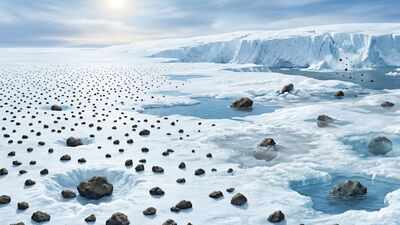
Antarctica holds more than 60% of the world’s meteorites, but warming could make thousands disappear into the ice

Antarctica holds more than 60% of the world’s meteorites, but warming could make thousands disappear into the ice |

Antarctica holds more than 60% of the world’s meteorites, but warming could make thousands disappear into the ice (PC: AI Generated) More than 60% of all meteorites ever found on Earth have been recovered from Antarctica, where dark rocks can remain exposed on bright blue-ice fields for thousands of years. Now, climate warming is putting…

Read More