









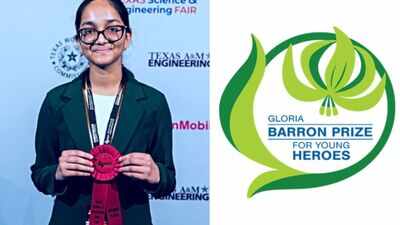
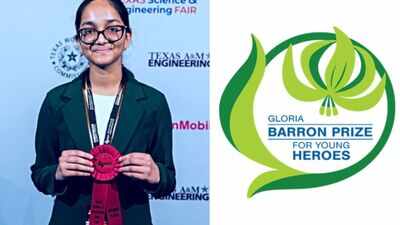
A power cut in Texas left Arya Gurumukhi and her family without heat for days during the severe winter storm of 2021. She was young, but the experience stayed with her. The problem was no longer an abstract question about climate or energy systems. It was something she had experienced inside her own home. Gurumukhi began looking into ways of producing energy without relying entirely on a conventional power grid, eventually turning her attention to artificial photosynthesis. The radio station licensed to Allentown, Pennsylvania Lehigh Valley Public Radio, revealed the result was the Bionic Leaf, a small-scale system designed to use sunlight, water, catalysts and bacteria to make an alcohol-based fuel. By 2024, the project had already taken her from a school laboratory to science competitions and work with communities overseas.
How Arya Gurumukhi turned a Texas power crisis into the Bionic Leaf
During the 2021 Texas winter storm, widespread power failures left Gurumukhi and her family dealing with freezing temperatures and an unreliable electricity supply. The experience prompted her to read about the weaknesses of power infrastructure and the possibilities of alternative energy. She began studying artificial photosynthetic systems, contacting academics and gradually developing the idea that would become the Bionic Leaf.The basic idea was borrowed from something much older than any modern energy system: photosynthesis. Plants use sunlight to drive chemical reactions and store energy in chemical form. Gurumukhi’s project attempted to reproduce part of that process artificially, but with bacteria involved in the final production of fuel.
Bionic Leaf: Catalysts, sunlight and fuel-making bacteria
The Bionic Leaf is essentially a laboratory system rather than a literal artificial plant. Sunlight provides the energy, while catalysts help drive reactions in water. The resulting chemistry supplies hydrogen that can be used by the bacterium Ralstonia eutropha, which then produces an alcohol-based fuel.Gurumukhi’s contribution was focused on the catalyst. Her project investigated a bi-functional material intended to make the process more effective and durable. Her science-fair work initially described a nickel oxide catalyst, with later versions of the project using manganese oxide as she continued developing the system. The work involved modifying the catalyst’s structure and chemistry so it could continue functioning through repeated use.
The unusual fuel system relied on a bacterium to finish the job
The microorganism at the centre of the process is Ralstonia eutropha. Rather than treating the bacterium as a contaminant or by-product, the Bionic Leaf uses its metabolism as part of the fuel-making system.In Gurumukhi’s research, the bacterial component was altered so that its carbon flow could be directed towards producing alcohol-based fuel. The catalyst and the microbe therefore perform different parts of the same chain: sunlight supplies the energy, the electrochemical stage produces the necessary intermediates, and the bacterium converts them into a usable fuel.It is an unusual combination of disciplines for a school project. Chemistry, materials science, biology and renewable-energy engineering all end up meeting inside the same device.
From a school project to a competition entry
Gurumukhi’s work began attracting attention through science competitions while she was a student at Plano East Senior High School. In 2024, she won recognition at the Texas Junior Academy of Science for her Bionic Leaf research and later received an award in the Energy: Sustainable Materials and Design category at the Regeneron International Science and Engineering Fair.The same year, she received the Gloria Barron Prize for Young Heroes. The award recognised her work on a catalyst intended to improve the Bionic Leaf, which was described as a solar-powered system capable of producing alcohol-based fuel using water, sunlight and bacteria.The recognition also brought a different question into focus: whether the device could exist outside a science-fair laboratory.
The experiment moved beyond Texas
Gurumukhi’s interest was not limited to demonstrating that the chemistry could work. She wanted the technology to reach places where electricity is difficult to obtain or unreliable.By the time she appeared on WDIY’s Teen Scientist programme in March 2025, she said the technology was being used in 15 communities in South Sudan. The programme discussed how she had worked towards getting the technology into those communities and what she had learned from its use there.That step changes the nature of the project. A prototype can be tested under controlled conditions. Putting a technology into a community introduces different requirements, from maintenance and materials to the practical realities of producing fuel away from a conventional laboratory.Gurumukhi has also described the Bionic Leaf as an open-source project, allowing others to examine and build on the work rather than keeping the design entirely behind a patent.
What the Bionic Leaf is trying to solve
The attraction of the system is fairly straightforward. Liquid fuels can be stored and transported in ways that electricity cannot always replicate, particularly in places where grid infrastructure is limited. A process that can turn solar energy into a chemical fuel could therefore have applications beyond simply generating electricity.There are limits, too. Gurumukhi’s work remains a developing technology rather than a replacement for petrol or diesel on the scale of the existing fuel industry. The significance of the project lies in the combination of biological and electrochemical processes and in the attempt to make that system cheaper, more durable and practical enough for use outside a research setting.Her competition research set engineering targets for solar storage and fuel production, and testing suggested the catalyst could withstand repeated charge and discharge cycles without obvious degradation. Those results provided a basis for continuing the work, rather than proving that the technology was ready for widespread commercial deployment.