









Every day thousands of showers, sinks and toilets flush warm wastewater down the drain. Now some of that heat is not going to waste in Vancouver. Instead, it is being recovered from sewage and pumped into buildings to power one of the city’s largest low-carbon heating systems, states a report by the International District Energy Association (IDEA). The city’s False Creek Neighborhood Energy Utility (NEU) has been recognized with the System of the Year Award by IDEA for 16 years of reliable service, innovative sewage heat recovery and its long-term carbon emission reduction strategy. Scroll down to understand the concept and its benefits for the larger goods.
From Olympic village to citywide service
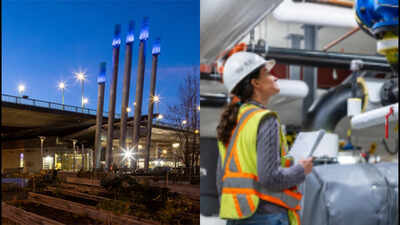
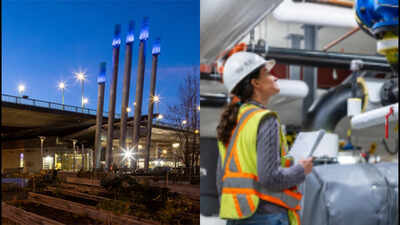
The report states that the False Creek was originally built for Vancouver’s Olympic Village for the 2010 Winter Games. The goal was simple: eliminate the individual building heating systems, traditionally powered by fossil fuels, and replace them with a centralized low-carbon energy network serving an entire neighborhood. Since then, the municipally owned and operated utility has grown significantly. It now serves 47 connected buildings in Southeast False Creek, Mount Pleasant and the False Creek Flats with a potential future buildout of roughly 2 million square meters.
Wastewater to heat
The biggest transformation in the system came in 2024, when Vancouver completed a major expansion of sewage heat recovery at the False Creek Energy Center. Two new high-efficiency heat pumps were installed, tripling the facility’s sewage heat recovery capacity to 9.8 megawatts. This technology captures the thermal energy of wastewater that would otherwise be lost and transfers that heat into the district energy system. The results were very good. Overall system efficiency increased from 103% in 2024 to 148% in 2025 In the same year, 73% of the NEU’s energy came from renewable sources. The system also saved 7,070 tons of CO2 in greenhouse gas emissions compared to a 2007 baseline.
A model other cities are watching
False Creek NEU’s impact goes beyond the buildings it serves. Its success has helped demonstrate that sewage and wastewater heat recovery can work at the utility scale, and has encouraged other communities throughout Metro Vancouver to explore similar approaches. Cities such as Burnaby, Surrey and New Westminster are considering or moving ahead with projects to capture heat from wastewater. The False Creek Energy Center has also become an educational center for students, municipal officials, utility professionals and decision-makers from across Canada and other countries.District energy leader namedOttawa, June 23-26, played host to the IDEA2026, where the System of the Year Award was given out. The award is the organization’s highest award for a district energy system and is given for outstanding performance, innovation and service. “False Creek NEU is an example of what can happen when a city makes a long-term commitment to district energy,” said Rob Thornton, President and CEO of IDEA. “This is not a demo project,” said Thornton. It is a ‘working utility’ that has provided reliable low-carbon heat for 16 years and continues to expand its renewable capacity.
Utilization of waste heat
Vancouver’s approach is a striking example of how cities can re-imagine resources they have conventionally treated as waste. Instead of letting valuable thermal energy disappear into the sewer system, False Creek NEU captures it and puts it back to work. With cities around the world looking for practical ways to cut emissions from buildings, Vancouver’s sewage-powered heating system shows that some of the energy needed for a cleaner urban future might already be flowing beneath their streets.