










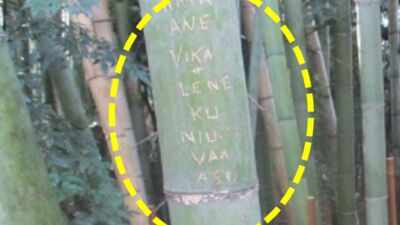
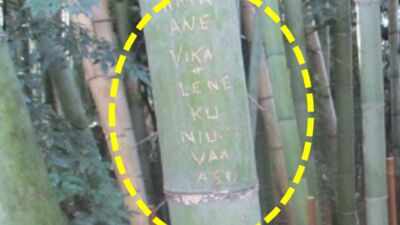
Kyoto’s famous Arashiyama Bamboo Grove is facing growing damage from tourists carving names and other writing into its bamboo stalks. A city investigation found that around 350 bamboo plants along the popular walking path had been damaged since spring 2025.The damage has prompted Kyoto city officials to take action. According to Strait Times, the city planned to cut down about 30 sq m of bamboo, including some of the damaged plants to protect the grove. Officials wanted to move the bamboo further away from the path so visitors cannot easily reach the stalks.The Arashiyama Bamboo Grove Path in Kyoto’s Ukyo ward is visited by both Japanese and international tourists. The trail runs through a bamboo forest and is known for its scenery. But writing and names carved into the bamboo have become an increasing problem as visitor numbers have risen again after the Covid-19 pandemic.The issue was highlighted during a city inspection last year. Officials found about 350 damaged bamboo plants along the path. When the area was visited on November 17, different types of writing could be seen carved into stalks on both sides of the busy trail. Some appeared to be names, including ‘Kate’ written in English and ‘Yoshitaka’ written in hiragana.
Bamboo damage increased with visitor numbers
The Kyoto city government owns about 2.3 hectares of land along the path, where an estimated 7,000 bamboo plants grow naturally. The large number of damaged plants has raised concerns about the condition of the grove and its appearance.A 34-year-old company employee visiting the area with a friend from Kasugai in Aichi prefecture expressed disappointment after seeing the damage. “There’s graffiti everywhere, ruining the scenery,” she said.The problem is not limited to the appearance of the bamboo. According to the Kyoto Botanical Gardens, bamboo is unlikely to wither or fall because of surface damage. However, once a carving is made, it remains on the bamboo stalk.According to Kyoto prefectural police, the graffiti could constitute destruction of property. Local groups have also been trying to hide some of the damage. Associations in nearby areas, including a shopping district, have used green masking tape to cover carved sections of bamboo.Warning posters have also been placed on fences along the path and around 50 rickshaws. The notices are written in Japanese, English, Chinese and Korean.
City plans special bamboo cutting
Kyoto city officials and local residents held their first emergency countermeasures meeting on November 5 last year, to deal with the situation. The meeting led to a plan for a trial cutting of about 30 sq m of bamboo on city-owned land.The area will include bamboo that has already been damaged. Cutting bamboo is generally not allowed in the area, but the city plans to make an exception as a special preservation measure.The purpose was not simply to remove damaged plants. Officials wanted to push the bamboo groves further away from the walking path. This would create more distance between visitors and the stalks, making it harder for people to physically reach and carve them.Misao Hashimoto, chief of the city government’s scenic preservation division, said the bamboo forest belongs to the wider community and criticised the deliberate damage.“The bamboo forest is a shared property of the citizens. In particular, as the beautiful landscape of Arashiyama has been maintained through cooperation from the local community, it is extremely regrettable that it has been deliberately damaged,” Hashimoto said.In 2018 too, Kyoto city officials also installed fences after around 100 bamboo plants were defaced.The bamboo grove had seen less damage when visitor numbers dropped during the Covid-19 pandemic. However, concerned groups said graffiti became noticeably more common again as tourism increased after the pandemic.According to Alo Japan, Kyodo reported that the city and a local organisation has cut about 20 bamboo plants along both sides of the path to create enough distance so visitors could not reach the stalks. The plants were cut along aroughly 30-metre stretch. According to the report, only four of the bamboo plants that were removed had graffiti; some undamaged plants were also removed to create the required gap. The city said it would consider further removal after assessing the effect on the scenery.The wider Saga-Arashiyama area, where the bamboo path is located, is known for its scenery and has also appeared in many tanka poems. The area has been designated a special zone for the preservation of historic scenery under Japan’s Law on Special Measures concerning Preservation of Traditional Scenic Beauty in Ancient Capitals.