









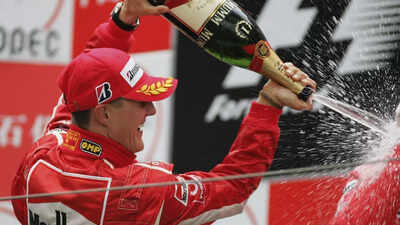
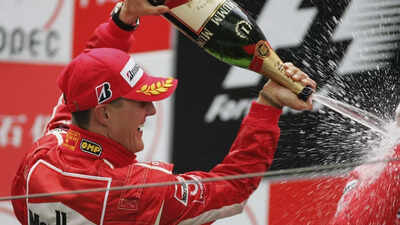
Two competitors can find themselves in a position with almost no realistic chance of success and respond to it in completely different ways. One does the rational-seeming thing and starts conserving effort, treating a nearly hopeless situation as effectively already decided. The other keeps pushing at full intensity regardless of the odds, refusing to let a small probability of success collapse into a decision to stop trying at all. Michael Schumacher, the Formula One driver who won a then-record seven World Championships across his career, built much of his reputation on the second instinct, both on the track and, though he could not have known it when he first said these words, in circumstances far more serious than any race. The distinction he draws is precise: not blind optimism about the odds, but a refusal to let the size of the odds decide whether the effort continues.
Quote of the day by Michael Schumacher
“I’ve always believed that you should never, ever give up and you should always keep fighting even when there’s only a slightest chance.”
Written by a driver famous for fighting past the point others would quit
What gives this line extra weight is how thoroughly Schumacher’s own racing career demonstrated it before he ever needed to prove it in any other way. He built his reputation partly on relentless preparation, spending more hours testing and refining setup details than most of his competitors, and partly on a willingness to keep pushing in races that looked lost, closing gaps that seemed mathematically implausible and finishing races other drivers had already mentally written off. That approach carried him through a career-threatening leg fracture in 1999 and a lengthy retirement, before he returned to Formula One in his forties for a further three-season stint with Mercedes, unwilling to let his own competitive story end on anyone else’s terms but his.The words took on a far heavier meaning after December 2013, when Schumacher suffered a severe traumatic brain injury in a skiing accident in the French Alps and was placed in a medically induced coma. He has remained almost entirely out of public view since, with his family keeping the details of his condition private. In the years since, this exact quote has circulated widely alongside the hashtag #KeepFighting, used by fans and, at times, his own team and sponsors, turning a line originally spoken about racing into something closer to a statement about his own ongoing, largely unseen recovery.
A simple way to actually use this idea
The useful move here is separating the size of the odds from the decision about whether an effort is still worth making, since the two get treated as though they must move together, when they don’t have to. A slight chance is still a chance, and treating it as functionally equivalent to no chance at all is itself a choice, not a neutral fact about the situation. It’s a distinction that matters most exactly when the odds look worst, since that is precisely the moment it becomes easiest to mistake “unlikely” for “impossible” and quietly stop trying before the outcome has actually been decided.A fair test, in a situation that feels close to hopeless, is to ask honestly whether any real probability of success still remains, however small, and if so, whether continuing to fight for it is still worth the cost of trying. That question won’t turn every long shot into a win. It usually keeps a genuine, if narrow, chance from being abandoned simply because it stopped looking comfortable to keep pursuing.
Other quotes by Michael Schumacher
- “Never think that success is down to your own performance alone. If you start listening only to yourself you take the first step back towards the bottom. The flowers of victory belong in many vases.”
- “You try to hide your emotions, so as not to show weaknesses to others. I believe it’s the same for every sportsman.”
- “I always thought records were there to be broken.”