



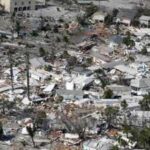




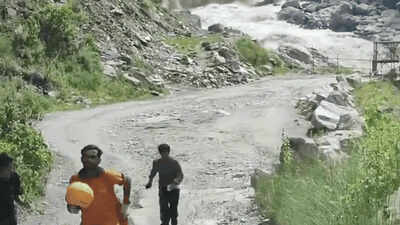
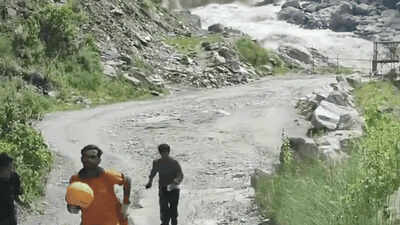
A flash flood in Nepal’s Rasuwa district sent torrents of muddy water and debris through communities along the Nepal-China border, with terrifying videos capturing people scrambling for safety as the waters surged through the region. At least 162 people have been killed and hundreds remain missing after the disaster.One video, filmed by a construction worker in Mailung, shows a sudden torrent sweeping into a work area as the entire crew scrambles to escape the rushing water and debris. The workers can be seen running for safety as the flood rapidly engulfs the site.A separate CCTV video from the Gyirong Port immigration office in Tibet, near the Nepal-China border, captures the destructive force of the flood. A massive wave of mud and silt surges past the building’s windows, overwhelming surrounding infrastructure within seconds as people flee the area.Nepal police reported at least 157 deaths, while China’s state broadcaster CCTV said three people were killed and 265 remained missing in Tibet’s Gyirong County.The disaster has also left hundreds of foreign nationals unaccounted for. Nepalese authorities said 403 people, including 341 foreigners, were reported missing, among them 133 Indians travelling towards Mount Kailash. At least 47 Americans, 34 Australians, 33 Britons and 24 Canadians were also reported missing.The Nepal Tourism Board said 62 Nepali citizens were among those missing after trekking in the Gosaikunda Lake area of Rasuwa. At least 28 police personnel were also reported missing.The disaster was initially believed to have been linked to an earthquake after seismic activity was detected near the Nepal-China border. The US Geological Survey later ruled out an earthquake, saying the seismic activity was caused by a magnitude 5.2 glacial collapse.The collapse sent ice, rock and debris downstream, triggering a sudden surge that caused catastrophic damage in the valleys below. Satellite imagery and assessments by climate researchers also pointed to an ice-rock avalanche from a glacier as the likely trigger.Researchers at the International Centre for Integrated Mountain Development said water levels in the Trishuli River rose by as much as 9 metres in just half an hour, highlighting the speed at which the disaster unfolded.Roads, bridges swept awayThe floods struck with little warning through steep valleys that serve as important transport and economic corridors. At least 19 bridges and nearly 40 km of roads were washed away, while the Bhotekoshi River surged through communities, damaging villages and hydropower infrastructure.The destruction has complicated rescue operations, with damaged roads and bridges cutting off affected areas. Nepal has sought assistance from India and China as authorities continue searching for survivors and those still missing.India, UN offer helpPrime Minister Narendra Modi spoke with Nepal Prime Minister Balendra Shah and offered India’s assistance with rescue and relief operations.“India is prepared to provide Nepal with all possible types of humanitarian assistance,” Modi said, adding that Indian teams were coordinating rescue and relief efforts.UN agencies are also deploying personnel to support the response, with UN spokesperson Stephane Dujarric warning of a “massive humanitarian need.”The disaster has renewed concerns about the vulnerability of the Himalayan region to extreme weather and glacial hazards.A similar flash flood struck the region last August after a glacial lake in Tibet overflowed amid high temperatures, killing nine people and damaging key infrastructure, including a bridge linking Nepal and China.Scientists have warned that accelerating glacier melt across the Hindu Kush Himalaya is increasing the risk of glacial floods, landslides and sudden water surges, making early-warning systems increasingly critical in a warming mountain region.