









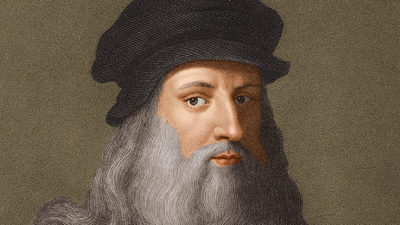
In an age of constant notifications, endless scrolling and instant entertainment, Leonardo da Vinci’s centuries-old warning about an inactive mind feels surprisingly modern. “Iron rusts from disuse; water loses its purity from stagnation… even so does inaction sap the vigour of the mind,” Leonardo wrote in his notebooks. The Renaissance polymath used familiar examples from nature to describe something less visible: the gradual weakening of the human mind when it is not challenged, exercised or engaged. For Leonardo, knowledge was not something to collect and leave untouched. It had to be pursued through observation, questioning and experience. His words offer a simple reminder that the mind, much like the body, needs regular activity to remain sharp and alive.
Quote of the day by Leonardo da Vinci: A warning about an inactive mind
Leonardo’s comparison begins with two ordinary observations. Iron that is left unused can rust, while stagnant water can lose its freshness and purity. He then extends the same idea to the human intellect.The message is straightforward. A mind that is rarely challenged can gradually become passive. Without curiosity, learning or meaningful engagement, our ability to think deeply can weaken.Leonardo was not suggesting that every quiet moment is harmful. Rest and reflection are important. His warning was directed towards prolonged intellectual inactivity, when a person stops questioning, exploring and learning.The idea was particularly fitting for a man whose own life was defined by almost relentless curiosity.A polymath who refused to stay in one fieldLeonardo da Vinci is often remembered primarily as the painter of the Mona Lisa and The Last Supper. Yet describing him only as an artist leaves out much of what made him extraordinary.He studied anatomy, mechanics, optics, water, geology, plants, animals and flight. His surviving notebooks contain thousands of pages of drawings, observations, questions and ideas.He dissected human bodies to understand their structures. He studied the movement of water and examined how birds flew. He investigated the proportions of the human body and explored mechanical systems that could be used in machines.His curiosity moved freely between disciplines.That habit of constantly asking questions is precisely what gives his quotation its force. Leonardo did not allow his mind to remain in one place for long.
Curiosity was at the heart of his thinking
For Leonardo, observation was one of the foundations of understanding.He repeatedly examined the natural world and attempted to record what he saw. His notebooks reveal an individual who was not satisfied with simply accepting established explanations.He wanted to know how things worked.Why does water move in particular patterns? How are muscles connected to bones? How does light behave? How do birds remain in the air? What gives a tree its structure?These questions took him into areas that today would belong to several different scientific disciplines.His approach also demonstrates why curiosity can be more powerful than simply possessing information. Information tells us what is already known. Curiosity pushes us towards what remains unexplained.
Why the mind needs to be exercised
Leonardo’s metaphor has an obvious connection with physical exercise.A person who never uses their muscles may gradually lose strength and endurance. The brain is obviously different from a muscle, but mental abilities also depend on continued use and stimulation.Reading, learning a new skill, solving problems, writing, discussing difficult ideas and attempting unfamiliar tasks can all require sustained mental effort.The important point is not to remain busy every minute of the day. Constant activity is not the same as meaningful mental engagement.A person can spend hours consuming information without actually thinking deeply about it.Leonardo’s warning is therefore less about being busy and more about being intellectually active.
The danger of mental stagnation
Mental stagnation can be comfortable.It is easier to remain with familiar ideas than to question them. It can be easier to watch another video than to read something demanding. It can be tempting to repeat opinions we already hold rather than examine evidence that might challenge them.But intellectual growth often begins precisely where comfort ends.Learning something unfamiliar forces the mind to make new connections. Changing one’s opinion after encountering better evidence requires intellectual flexibility. Trying to solve a difficult problem demands patience.These activities keep the mind engaged.Leonardo’s comparison with stagnant water is therefore particularly effective. Water that does not move becomes a symbol of a mind that stops exploring.
Leonardo’s life reflected his own philosophy
Perhaps the most interesting aspect of the quotation is that Leonardo appeared to live according to its principle.His interests were extraordinarily broad. He could move from painting to anatomy, from anatomy to mechanics and from mechanics to the study of nature.Many of his notebooks show unfinished ideas and questions rather than neat conclusions. He was constantly observing, recording and reconsidering.Not every idea became a successful invention, and not every investigation produced a discovery. But the process itself kept his mind active.That may be one reason Leonardo remains such a compelling historical figure. His legacy is not based only on a handful of finished masterpieces. It also comes from the enormous curiosity visible in the thousands of pages he left behind.
What the quote means today
Leonardo’s words have gained a different kind of relevance in the digital age.Modern technology gives people unprecedented access to information. A question can be searched within seconds. A new subject can be introduced through a short video. Artificial intelligence can provide explanations almost instantly.But access to information does not automatically create understanding.The harder task is to think about what we encounter, question it, connect it with what we already know and sometimes investigate it further.That is where Leonardo’s message remains useful. The mind should not simply be filled. It should be exercised.
Keeping the mind moving
Leonardo’s quote ultimately offers a simple principle: use what you have or risk losing its sharpness.That does not mean everyone needs to become an inventor, scientist or artist. It means remaining curious about the world.Read something outside your usual interests. Learn a new skill. Ask why something works the way it does. Try to understand an unfamiliar idea before dismissing it. Create something instead of only consuming what others have created.Small acts of intellectual activity can prevent the kind of stagnation Leonardo warned about centuries ago.Iron rusts when left unused. Water can stagnate when it stops moving. Leonardo’s deeper point was that the human mind also needs movement, challenge and curiosity.For a man whose life was defined by an almost insatiable desire to understand the world, that may be one of his most enduring lessons.