










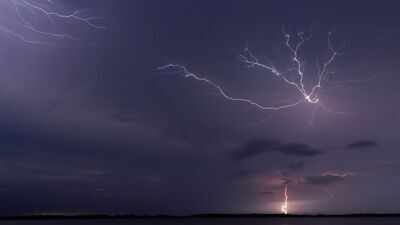
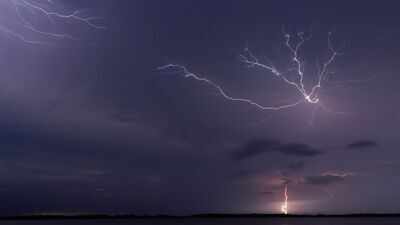
Lake Maracaibo in north-western Venezuela is home to one of the most remarkable lightning displays on Earth. Around the southern part of the lake, thunderstorms can return night after night, producing flashes with such regularity that the phenomenon is known as ‘Catatumbo Lightning’ (because Catatumbo River meets Lake Maracaibo). Nasa Earthdata reports that lightning can strike about 28 times a minute for as long as nine hours after dusk, while the area experiences this spectacle on roughly 300 days each year. The lake’s unusual geography helps create the conditions of warm, moisture-filled air that arrives from the Caribbean Sea and is channeled towards surrounding mountains, where it rises and feeds powerful storms. The result is a ‘natural light show’ that has served as a beacon for sailors for centuries, shaped local life and become a major focus for scientists trying to understand and predict lightning across the basin.
Why does Lake Maracaibo experience so much lightning
The extraordinary frequency of lightning around Lake Maracaibo is closely connected to the landscape surrounding it. According to Nasa Earthdata’s article, the lake is bordered by mountain ranges on three sides, while its northern opening connects towards the Gulf of Venezuela and the Caribbean Sea. This arrangement allows warm, moisture-rich air from the Caribbean to enter the basin.The lake itself also provides moisture. During the day, the tropical sun warms the water and surrounding land. After sunset, winds begin moving moisture through the basin. The combination creates an environment in which warm, humid air can rise rapidly and form large thunderclouds. The 2016 study published in the ‘Bulletin of the American Meteorological Society,’ found that the most intense lightning hotspots are often linked to local geography. In the Lake Maracaibo region, thunderstorms are unusually persistent because local winds and mountain ranges repeatedly encourage storms to develop in much the same area.
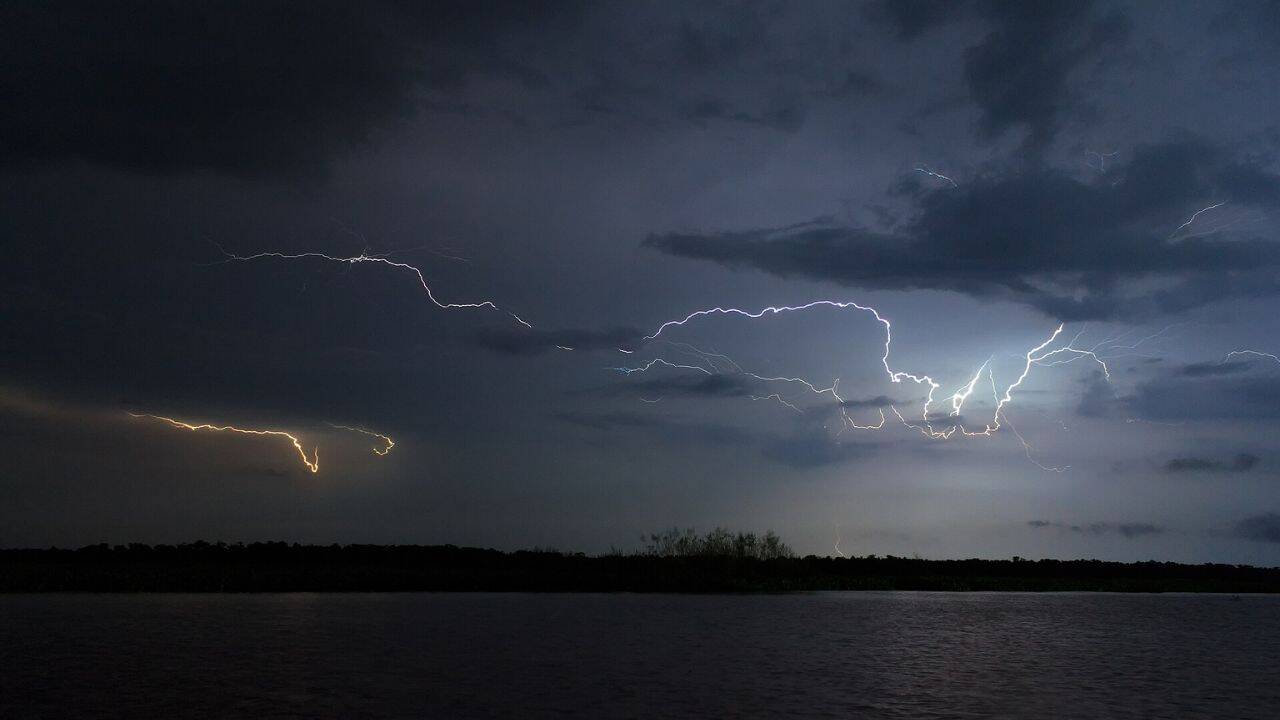
Catatumbo Lightning is an atmospheric phenomenon in Venezuela. Image Credit: Fernando Flores/Wikipedia
How often does this lightning appear
The numbers associated with Catatumbo Lightning are remarkable. Nasa Earthdata states that lightning around the mouth of the Catatumbo River can begin shortly after dusk and continue for up to 9 hours. At its most intense, the flashes can occur about 28 times a minute. It also states that the phenomenon occurs around 300 days each year.According to the satellite-based lightning research published by the American Meteorological Society, Lake Maracaibo is at the top of the world’s lightning hotspots. Its figures give the region an average lightning flash-rate density of about ‘232 flashes per square kilometre per year,’ based on observations from 1998 to 2013. The site also reports that nocturnal thunderstorms occur there on roughly 297 days per year. The exact numbers vary depending on the dataset and method used, but the overall picture remains clear that this is not an ordinary thunderstorm region, lightning is a regular part of the landscape.
Why the storms return to the same area
One of the most important discoveries has been the role of a low-level wind pattern over the Maracaibo Basin. Nasa Earthdata explains that researchers used weather balloons in 2015 and identified a swift ribbon of air close to the surface. This wind, known as the ‘Maracaibo Basin Nocturnal Low-Level Jet,’ transports moisture towards the southern part of the basin, where it encounters the surrounding mountains.The International Research Institute for Climate and Society, or IRI, described this wind system as a kind of daily atmospheric tide. It moves from the Caribbean towards the southern basin before changing direction, and its interaction with the mountains helps determine where and when the lightning develops. As moist air is pushed towards the mountains, it has nowhere to go but upwards. Rising air helps build tall thunderclouds. Inside these clouds, collisions involving water droplets and ice particles create electrical charges. Eventually, the accumulated charge is released as lightning. This combination of warm water, abundant moisture, predictable winds and surrounding mountains gives Catatumbo Lightning an unusual degree of consistency.
How did scientists discover that Lake Maracaibo was the world’s lightning hotspot
Much of the evidence came from space. The American Meteorological Society studied 16 years of satellite observations to identify lightning hotspots around the world. The research used data from Nasa’s Lightning Imaging Sensor and the Optical Transient Detector, allowing scientists to examine lightning activity at a much finer scale than earlier global maps.The results revealed that lightning is not spread evenly across the planet. Certain small regions produce exceptionally large numbers of flashes, and Lake Maracaibo stood out as the leading hotspot, with other major hotspots in Africa and South America following behind. Satellite observations were particularly useful because lightning can be difficult to monitor consistently from the ground, especially across remote regions.
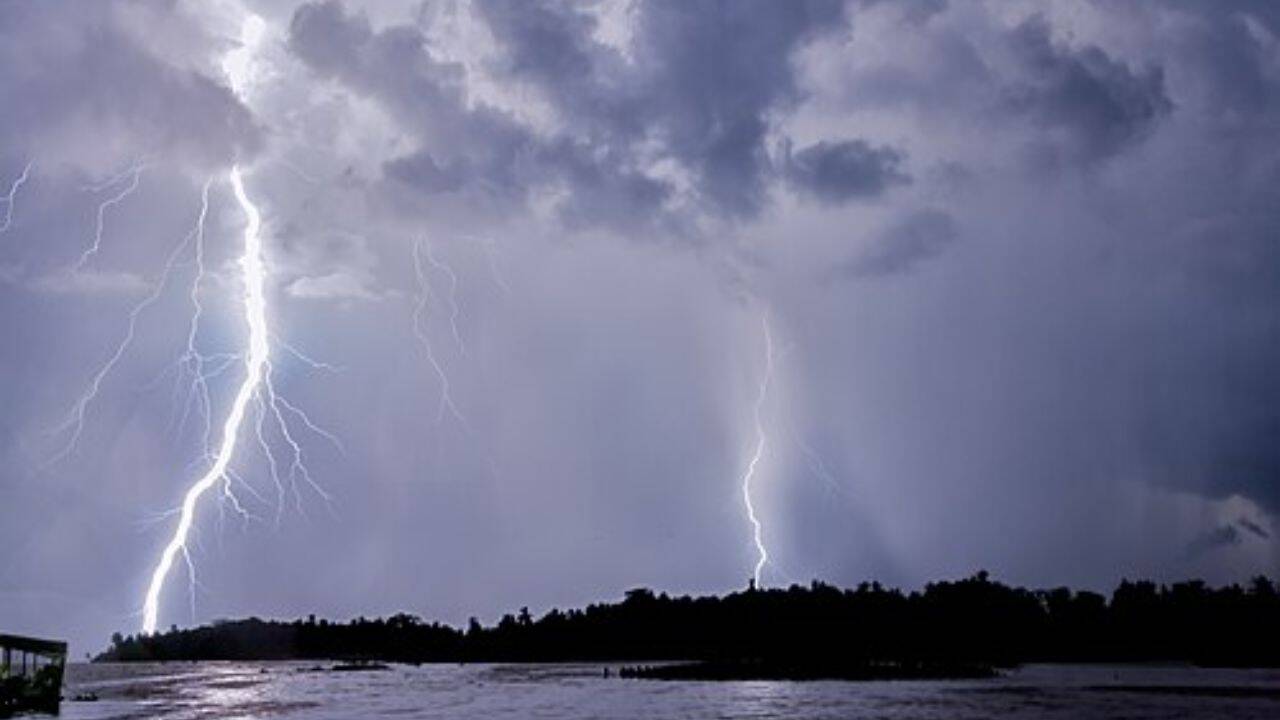
Catacumbo lightning occurs where Catacumbo River empties into Lake Maracaibo. Image Credit: Fernando Flores/Wikipedia
Why does lightning matter to people living around the lake
For local communities, Catatumbo Lightning is much more than a spectacular natural phenomenon. Nasa Earthdata reports that Lake Maracaibo supports thousands of fishermen, many of whom live in stilt-house communities around the lake. The frequent storms create a serious safety concern, particularly for people travelling across the water at night.The lightning also affects Venezuela’s oil and energy infrastructure. The IRI reported that lightning can interrupt oil and natural-gas operations in the region, while damage and disruption can also affect electrical infrastructure. For centuries, however, the same lightning that creates danger has also helped people navigate. Geology.com reports that sailors have called it the ‘Beacon of Maracaibo’ because its flashes can be visible from the Gulf of Venezuela and, under favourable conditions, farther into the Caribbean.
Can scientists predict when the lightning will be strongest
The IRI reported in 2016 that a team led by Ángel Muñoz had developed the ‘world’s first seasonal lightning forecast’ for the Catatumbo region. Researchers examined factors including winds, moisture, sea-surface temperatures and atmospheric instability. They found that wind patterns and atmospheric instability were particularly useful for predicting changes in lightning activity.Nasa Earthdata explains that the researchers combined satellite observations covering 17 years with climate information to build their prediction model. The work showed that lightning activity is generally strongest during wetter months such as September and October and weakest during the drier period around January and February. Such forecasts could have practical value. Fishermen could potentially plan journeys around periods of higher lightning risk, while industries operating around the lake could adjust activities when unusually active storms are expected.Lake Maracaibo’s extraordinary lightning is therefore more than a striking natural spectacle. What looks from a distance like an endless light show is, to scientists and local communities, a complex natural system that can be studied, understood and perhaps predicted.