











For a centuries-old game that has witnessed and survived the rise and fall of empires, kings and kingmakers, chess has developed a vocabulary of its own. This vocabulary is a veritable tour of the people and places that have had major influence on the game.To an ordinary person, 1.e4 c5 is simply a sequence of moves; to a chess player it is the Sicilian Defence. Why Sicily and not Shanghai or St. Louis? Or why Ruy Lopez and not Roy Lampert?I have long been curious to learn the history behind people and places after whom various chess openings and variations are named. One column won’t be enough to cover these places and people; one would have to write an entire book.Europe dominates these places in chess vocabulary. There are historical reasons behind the European dominance, but that is material for another column. In this column, I will write about a few well-known places that many readers may themselves have visited.
The Italian Job
Sicily is well known for Mount Etna, historical ruins and lovely beaches. It is also associated with an often-played move in chess. After 1.e4, Black answers 1…c5, refusing to mirror White in the center and instead attacking it from the side.The Sicilian Defence is played from club level to world championship matches. Its ancestry dates back at least to the Italian theoretician Giulio Cesare Polerio. In a manuscript dating from around 1594, Polerio analysed the sequence 1.e4 c5, making his work one of the earliest known discussions of the opening.
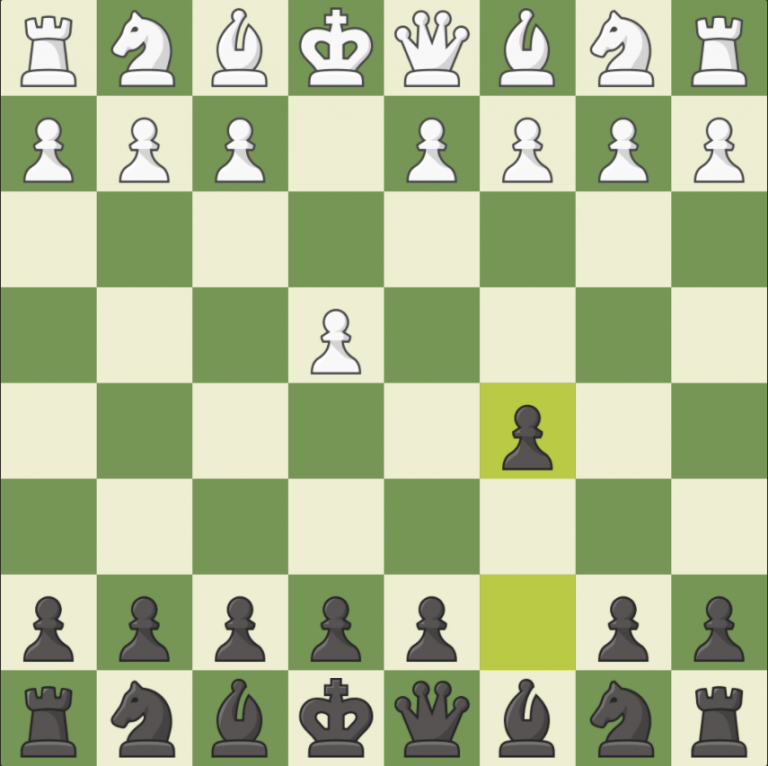
The Sicilian Defence
Polerio did not name the opening. In 1813, the English writer Jacob Henry Sarratt cited an older Italian source that called it il gioco siciliano (the Sicilian game), helping to establish the term in chess literature.The opening’s reputation was uneven. Some influential theorists dismissed it as an irregular response to 1.e4, while strong nineteenth-century players showed its counterattacking promise.Over time, its eccentricity became its chief appeal: Black does more than defend the center;Black creates imbalance from the first move. The Sicilian Defence is an aggressive counterpunch. It may not always succeed, but then again, neither do all Italian jobs!
El Matador
Watching a matador face a raging bull in the rings of Las Ventas in Madrid is an experience you remember for life. Twelve hundred pounds of hulk, armed with two sharp horns, charging at a matador with a singular objective of goring him. The matador deftly moves aside at the last moment with a calm precision.I like to think of Spanish Opening as El Matador for the serenity with which White opens and builds the game against Black.
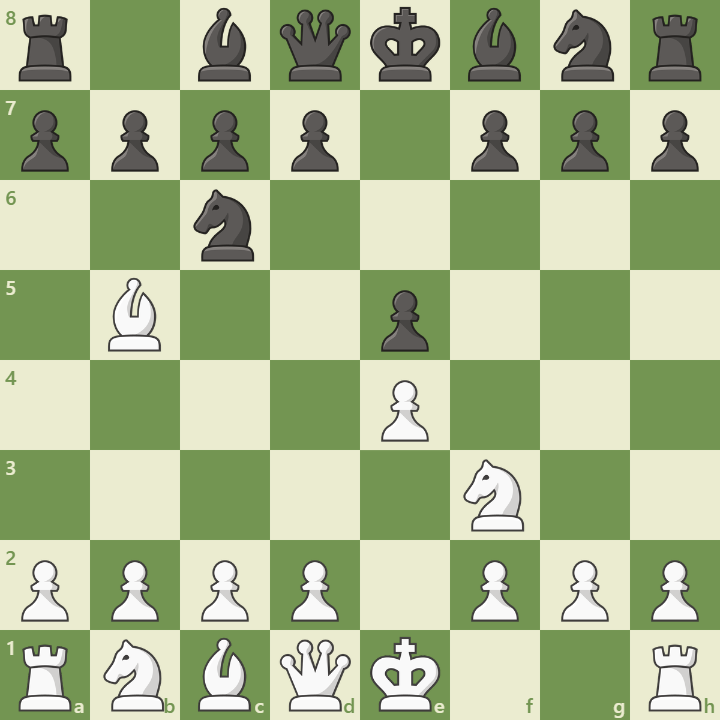
The Spanish Opening, also known as the Ruy Lopez, is a classic chess opening that starts with the moves 1. e4 e5 2. Nf3 Nc6 3. Bb5.
Better known as the Ruy Lopez, the Spanish Opening is one of the foundations of classical opening theory. Its most famous early treatment appeared in Libro de la invencion liberal y arte del juego del axedrez, published at Alcalá de Henares in 1561 by the Spanish priest Ruy López de Segura.López did not invent 3.Bb5; the idea appears in earlier sources, including the Göttingen manuscript from around the late fifteenth century. His contribution was to give the move one of its first systematic analyses. His work proved so influential that the opening came to bear both his name and, across much of Europe, his nationality: the Ruy Lopez, or Spanish Opening.
The French Connection
My chess journey is intricately linked to France. I have fond memories of that country. I made my first IM norm in Paris and have generally done well in tournaments in France.Named after this wonderful country, the French Defence owes its identity to a correspondence match between Paris and London in 1834, in which members of the Paris team adopted this defensive technique.
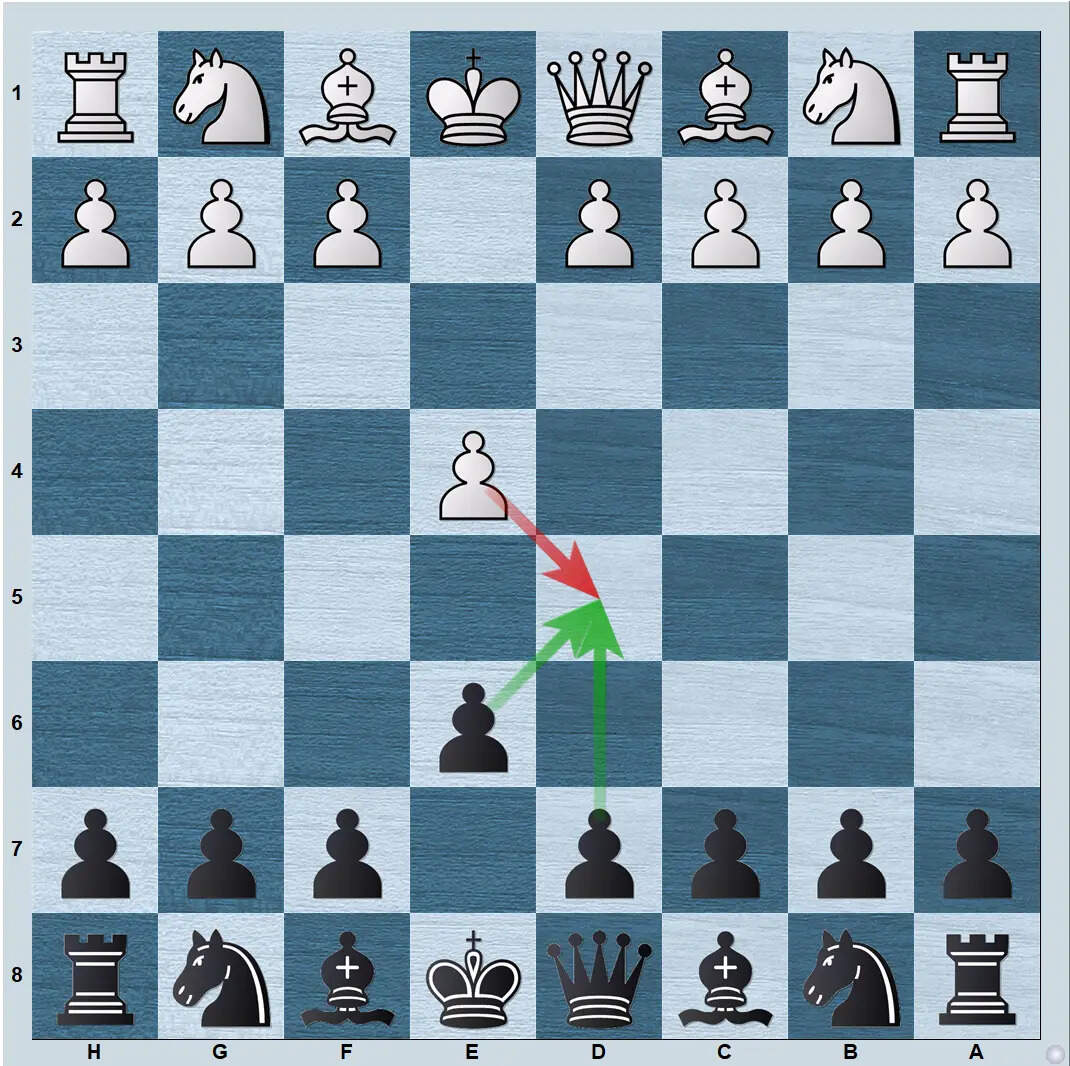
Position after 1.e4 e6
French Defence looks modest. Black does not immediately challenge White’s pawn on e4. Instead, Black prepares …d5 by playing 1…e6 and builds a compact central structure. Yet the opening creates exactly the sort of strategic tension that has kept it alive for nearly two centuries.
Berlin Wall
For almost three decades, the Berlin Wall stood as a symbol of the ideological and geopolitical battles between the two world superpowers. When the wall came down in 1989, the pieces on the geopolitical chessboard were rearranged, followed by the reunification of modern-day Germany.Berlin Defence, also nicknamed Berlin Wall, is one of the old branches of the Spanish Opening. It gets its name from the Berliners who analysed its variations deeply. It is a very defensive opening by Black. So solid that White must work hard to break it down (hence the nickname Berlin Wall).The opening appears in the 1843 edition of Handbuch des Schachspiels edited by Paul Rudolf von Bilguer. It was deployed in the world championship contests in the late 19th century.
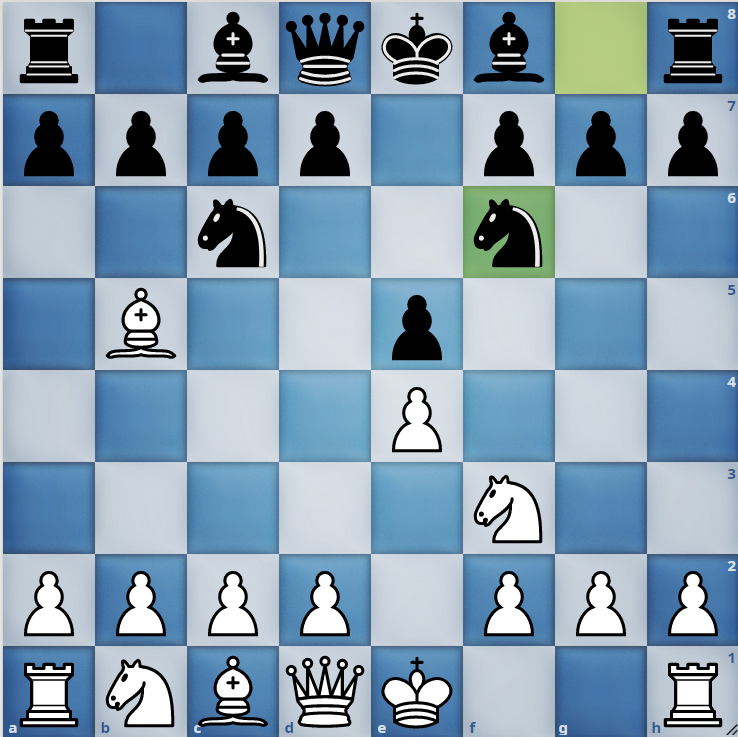
The starting position of the Berlin Defense is reached after 1.e4 e5 2.Nf3 Nc6 3.Bb5 Nf6
It went out of fashion for almost a century until Vladimir Kramnik revived it in the 2000 World Championship match against Garry Kasparov. Kramnik played it in four games (all with Black) and frustrated Kasparov with draws in all four games. After losing the championship to Kramnik, Kasparov attributed his loss to Kramnik’s superior preparation with Black. The four openings above are among the best-known of those named after equally well-known Places.Read also: Before AI, there was the Mechanical Turk: The chess machine that wasn’t(Aarav Dengla is India’s 93rd Grandmaster. He is a keen observer and student of world history in general and chess history in particular.)