








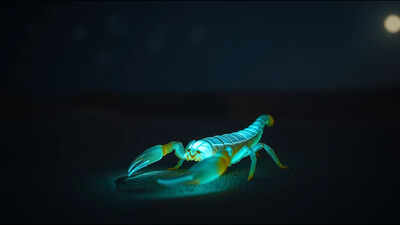
In 1945, an Arizona State University professor began wandering the desert at night, hunting scorpions that glowed under his black light, and few people around him understood why. That professor, Herbert L Stahnke, was already the nation’s leading authority on scorpions when he founded the university’s Poisonous Animals Research Laboratory that same year. His goal was ambitious for the time: developing an antivenom for infants who suffered life-threatening reactions to scorpion stings, which had killed twice as many people in Arizona as every other venomous creature combined over the previous 20 years put together. Stahnke relied heavily on the local community to supply him with specimens, turning ordinary residents into citizen scientists decades before the term itself became common. By 1948, he had succeeded, producing an antivenom credited with saving many young lives and laying the foundation for venom research that continues at the university to this very day.
How Stahnke turned scorpion hunting into a citizen science campaign
Handling dangerous desert creatures was an unusual path for a Chicago-raised biologist, but after graduating from the University of Chicago in 1928, Stahnke moved to Arizona and began teaching science at Mesa High School. His doctoral dissertation, titled The Scorpions of Arizona, was inspired by the death of a child in Mesa from a scorpion sting, and 2 years later he became the first head of the Department of Biological Sciences at Arizona State College, the university’s predecessor. As detailed in Creepy Crawly Science That Matters, Stahnke needed roughly 150 scorpions to produce a single dose of antivenom, so from the mid 1930s onward he called on the public to bring him specimens, offering neighbourhood children between 5 and 25 cents apiece depending on the species.
Why the scorpion antivenom mattered so much for young children
Stahnke’s research went beyond simply collecting scorpions. He also discovered that treating stung patients with morphine, standard practice at the time, actually made the venom more toxic rather than easing the reaction. His laboratory studied more than scorpions too, including black widow spiders, centipedes, tarantulas and Gila monsters, but the antivenom remained his defining achievement. One recipient, Neil Wheeler, was stung as a 6-month-old infant in 1951 and fell into convulsions with a fever of 106 degrees at a Phoenix hospital, where doctors told his mother he was unlikely to survive. A hospital intern who had studied under Stahnke reached him directly, and Stahnke personally delivered the antivenom that saved the child’s life.
How ASU’s venom research legacy continues today
Stahnke’s laboratory closed in 1988, and its antivenom supplies were fully depleted by around 2004, after which a privately produced antivenom took its place, generally at a higher cost to patients. Yet the university’s tradition of studying venomous desert animals for medical benefit has endured well beyond his career. In one recent example, ASU researchers completed the first full genome sequencing of the Gila monster, a project detailed in Lack of dosage balance and incomplete dosage compensation in the ZZ/ZW Gila monster revealed by de novo genome assembly, which uncovered unusual patterns in the reptile’s sex chromosomes and could eventually deepen understanding of the venom-derived compounds already used to treat type 2 diabetes. Nearly 80 years after Stahnke first switched on his black light in the desert, ASU’s fascination with the region’s most feared creatures continues to yield discoveries with very real value for human health.