






In 1916, a small piece of land along Texas’ Leon River became the starting point for what would eventually become the state’s first state park. Isabella Neff, known locally as Mother Neff, had long welcomed neighbours and community groups to the riverbank for picnics, gatherings, fishing and other events. She donated six acres of her favourite spot to the State of Texas for a park in 1916. According to the Texas Parks and Wildlife Department (TPWD), her son, Pat Neff, later expanded the family’s contribution by donating 250 acres to the state in 1934. What followed was the development of Mother Neff State Park, shaped further by the Civilian Conservation Corps and officially opened in 1937.
A family arrives in Texas
Isabella Eleanor Shepherd was born in Roanoke, Virginia, in 1830. She married Noah Neff in 1854, and after their marriage, the couple decided to move to Texas. Their journey from Roanoke to Belton took 52 days by carriage because they did not travel on Sundays.After spending three months in Belton, the couple moved into a small log cabin near Eagle Springs. There, they raised nine children. Their youngest son, Pat Morris Neff, would later become a teacher, lawyer, governor of Texas and president of Baylor University. The Neff family eventually owned about 900 acres along the Leon River, including the land that would become the park.
A favourite place by the river
The land was already a gathering place long before it became a state park. Isabella Neff was well known and respected in the local community, and she regularly invited neighbours and friends to spend time along the river.People came to the shaded riverbanks and grassy areas to picnic, swim and fish. Community groups also asked to use the property for meetings and celebrations. Political rallies, church events, family reunions and other gatherings brought visitors from surrounding communities, with some people camping overnight.One group, the Woodsmen of the World from the nearby Whitson community, had held an annual picnic on the property since 1905. Although the organisation sometimes offered to pay Mother Neff for use of the grounds, she refused. She wanted the place to remain available for community gatherings.
Six acres become a public gift
Isabella Neff died in May 1921. She had donated six acres of her favourite spot along the river to the State of Texas for use as a park. At the time, Texas did not yet have an official state park system. Her son Pat therefore took responsibility for developing the property. He established what became known as Neff Memorial Park, adding campgrounds, picnic areas and walking trails. The six-acre donation was modest in size, but its significance grew as Texas began developing a formal state park system.
Her son adds 250 acres
The State Parks Board became official in 1923 and began accepting privately donated land into the state system. Pat Neff continued his mother’s vision. In 1934, then-Governor Pat Neff donated the family park, totalling 250 acres, to the state. His neighbour Frank Smith also donated 3.5 acres. These contributions transformed the original six-acre gift into a much larger public recreation area. Mother Neff State Park officially opened in 1937.
The CCC builds the park
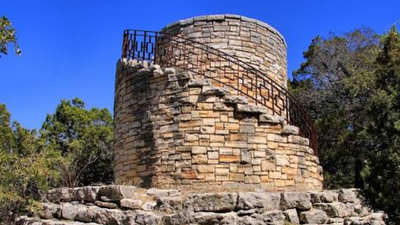
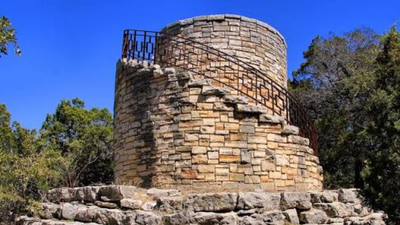
The park’s development took another major step during the Great Depression with the arrival of the Civilian Conservation Corps, or CCC. Company 817, made up of more than 200 men, worked at the site from 1934 to 1938. The workers constructed roads, walking trails, picnic areas and campgrounds. They also built several of the structures that would become defining features of the park.Using limestone and other materials from the area, the CCC constructed a pavilion, recreation hall, concession hall and a stone water tower with an observation deck overlooking the valley. Designers, architects and skilled craftsmen worked alongside the young men, helping them develop practical construction skills.
The river remains a challenge
The same river that made the area attractive for recreation has also repeatedly created problems. Heavy seasonal rainfall has caused the Leon River to flood, sometimes forcing the park to close for lengthy repairs. CCC planners attempted to protect buildings from floodwaters by raising certain areas. The riverside campground was positioned as high as possible, while the Recreation Hall was built on a mound created by CCC workers.Despite those efforts, severe flooding continued over the years. The park eventually underwent major reconstruction, and a new Park Headquarters and Visitor Center opened in January 2015.
A legacy that grew
Today, Mother Neff State Park covers far more land than the six acres Isabella Neff originally donated. Pat Neff’s 250-acre contribution, Frank Smith’s 3.5 acres and an additional 142 acres acquired by Texas Parks and Wildlife in 2012 brought the present park to 399 acres.Yet the story of the park still begins with Mother Neff’s small gift. She had already treated the riverbank as a place for the community during her lifetime, and her decision to give the land to the public ensured that others could continue enjoying it. The Texas Parks and Wildlife Department now describes Mother Neff State Park as Texas’ first state park, crediting the Neff family’s generosity and the CCC’s work. What began with six acres along a river became a lasting public space and an important part of Texas’ conservation history.