






Try to picture it: waking up to snow in June, watching crops die when there should’ve been sunshine, and feeling like the sun itself had taken a day off.Sounds absolutely impossible, right? Especially with all the news updates of heatwaves sweeping in from across the world.But in 1816, that’s exactly what happened across the Northern Hemisphere. People called it the “Year Without a Summer,” and it was just as bleak as it sounds.
The year without summer: What exactly happened?
In the US, especially in New England, cold snaps, icy frosts, and even snowstorms hit right in the heart of summer. Harvests failed, food grew scarce, and desperate families packed up and moved, hoping to find better farmland somewhere else. Over in Europe, constant rain and ruined crops brought famine and, as one would expect, widespread suffering.Asia didn’t escape either. Such a sudden and massive change in weather meant poor yields and new disease outbreaks. People at the time had no idea why the weather went haywire. Many blamed angry gods or strange events in the sky.But the truth is, the real culprit was nowhere nearby; it was a volcano halfway across the world in Indonesia. When Mount Tambora erupted in 1815, it set off a chain reaction that turned 1816 into one of the coldest, strangest years on record. Even now, it’s a clear example of how a single eruption can ripple through history, shifting everything from weather to where people live.
The natural disaster that caused it all
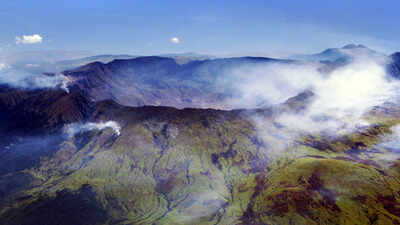
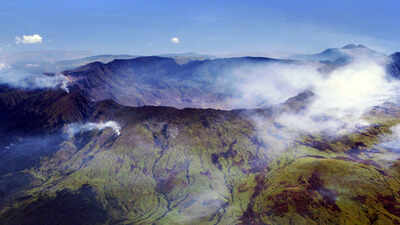
On April 10, 1815, Mount Tambora blew its top on the island of Sumbawa, Indonesia. To this day, it’s the most violent volcanic eruption humans have ever recorded. The force was staggering: about ten times stronger than the famous Krakatoa blast. The eruption killed tens of thousands on the spot, but its biggest effect was invisible and came much later.Mount Tambora blasted so much ash and gas into the sky that it drifted into the upper atmosphere, wrapping the planet in a layer of haze. Instead of coming down right away, those particles floated for months and bounced sunlight back into space.As a result, the whole world got colder. Temperatures dropped about half a degree Celsius on average, which was enough to throw entire weather systems off balance.People really felt that in 1816.
The aftermath
Spring in the eastern US barely arrived before winter barged back in. Throughout June, July, August, frosts kept coming, crops withered, and snow fell when people should’ve been sweating over their fields. Harvests failed. Animals couldn’t find enough to eat. Food prices shot up, sending families packing for the Midwest, hoping the grass was greener.Europe got hit even harder. The cold teamed up with constant rain, and crops drowned or rotted where they stood. Grain supplies dried up, bread became a luxury, and riots broke out as hunger spread, especially in Ireland and central Europe. Historians look back at it as one of the last truly devastating famines in the West.In Asia, things unraveled too. China went through an unusually cold year, and harvests tanked. India’s weather changed enough to help trigger a new cholera strain: a disease that would end up circling the globe.
What came out of that ‘disastrous’ year?
But the “Year Without a Summer” didn’t just spell disaster. Funny enough, it nudged creative types in new directions. That summer, stuck indoors by endless rain near Lake Geneva, Mary Shelley, Lord Byron, and John Polidori entertained themselves by writing spooky stories.Interestingly, that little challenge gave the world ‘Frankenstein’ and ‘The Vampyre’ — two works that would haunt (and inspire) generations. Artists like Turner and Caspar David Friedrich painted dramatic sunsets, thanks to the volcano’s haze. And since horses became too pricey to maintain in some places, German inventor Karl Drais ended up building the first version of the modern bicycle. Who knew hardship would spark so much creativity!In a way, the “Year Without a Summer” showed just how tangled our world is. One volcanic outburst on a remote island sent shockwaves to every corner of the globe. Weather, farming, migration, disease, even art and invention — all of it, upended.Today, scientists use Tambora’s eruption as a kind of test case. They want to understand how volcanoes influence climate, and what could happen if something similar struck again. Sure, our tools: weather forecasts, food supply chains, emergency plans, etc., to make dealing with disaster a bit easier. But a blast as big as Tambora’s would still be a huge challenge, even now.