










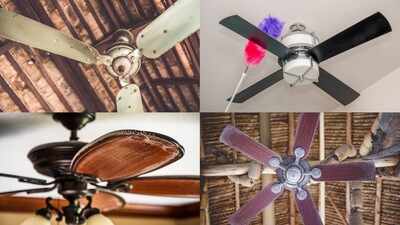
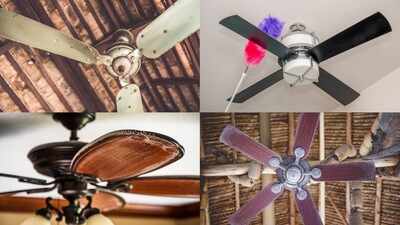
There’s a particular kind of dread that sets in when you finally look up at your ceiling fan and realise just how much dust has quietly settled onto those blades, grey, fuzzy, and worse, occasionally raining down onto your bed or dinner table when the fan’s switched on. The instinct is to reach for a ladder, but not everyone has one handy, or feels steady enough to be balancing on one near a spinning appliance overhead. The good news is a genuinely dust-free fan doesn’t actually require climbing anything at all. Here’s how to get your ceiling fan blades properly clean using tools you can operate entirely from the ground.
Reach for an extendable duster with a flexible head
This is genuinely the easiest, purpose-built solution for the job. Extendable dusters, widely available at hardware and home stores, typically stretch anywhere from about a foot to well over five feet, with a flexible or pivoting head that can angle up and wrap around a fan blade from below. Some versions even come with a double-sided or slanted brush design specifically made to clean both the top and bottom of a blade in a single motion. Turn the fan off first, then simply extend the duster and gently wipe each blade until the dust lifts away.
The DIY broom-and-pillowcase trick
If you don’t have an extendable duster on hand, a bit of household improvisation works just as well. Slide an old pillowcase over the end of a long broom or mop handle, securing it firmly with a rubber band, and use it to wipe along each blade. Alternatively, if your fan sits low enough to reach with an extended arm and a step stool isn’t an option, gently sliding a pillowcase directly over each blade and pulling it back traps the dust inside the fabric rather than scattering it across the room, keeping the whole process considerably less messy.
Use a vacuum cleaner with the right attachment
A vacuum fitted with an extension wand and a soft brush attachment is another genuinely effective ladder-free option, particularly useful for pulling dust away rather than just displacing it into the air. Gently run the brush attachment along the length of each blade, top and bottom, letting the suction do most of the work rather than pressing hard against the blade itself. This method works especially well for anyone dealing with allergies, since it actively removes dust from the room instead of just relocating it.
Tackling grease and stubborn grime once the dust is gone
Dust is usually the easy part; kitchen-adjacent fans in particular tend to accumulate a layer of sticky grease that a dry duster alone won’t budge. For this, dampen a cloth with a mild all-purpose cleaner, or mix a simple solution of equal parts white vinegar and water, and wrap it around the head of your extendable duster or broom-and-cloth setup. Wipe with light, even pressure rather than pushing hard, since excessive pressure can bend or unbalance lightweight fan blades over time.
Minimise the mess before you even start
A little prep goes a long way here. Lay an old bedsheet or drop cloth on the floor and furniture directly underneath the fan before you begin, catching whatever dust inevitably drifts down during cleaning rather than leaving it to settle on your bed or floor. If you’re sensitive to dust or allergies, a simple dust mask is worth the minor inconvenience, especially since a heavily soiled fan can release a fair amount of particulate matter once disturbed.
Keep it cleaner for longer
Once your fan is properly clean, a couple of small habits go a long way toward delaying the next big clean-up. Wiping blades down every two to three months, rather than waiting until buildup becomes visible, keeps the job quick and manageable each time. Some people also swear by a light coat of car wax on freshly cleaned blades; the smooth, waxed surface makes it noticeably harder for dust to stick and accumulate, buying you extra weeks between cleanings.
Disclaimer:
This article is intended for general informational purposes only. Always turn off the fan and ensure the blades have come to a complete stop before attempting to clean them, and never spray liquid cleaner directly onto the fan or its motor housing. If your ceiling fan is positioned too high to reach safely even with an extendable tool, consider consulting a professional for cleaning or maintenance.