








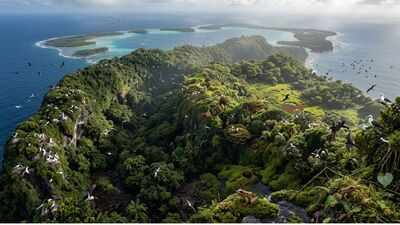
Atolls may look like tiny rings of sand and coral scattered across warm tropical oceans, but they are far more important than their small land areas. These unusual natural formations can develop over millions of years and provide breeding grounds for huge numbers of tropical seabirds. The study published in Nature Ecology & Evolution, titled ‘Atolls are globally important sites for tropical seabirds’, has found that atolls across the Indo-Pacific support an estimated 31.2 million nesting seabirds, representing about one quarter of the world’s tropical seabirds. The research also shows that these birds do much more than simply use atolls as safe places to breed. Their droppings return large amounts of nutrients to islands and surrounding waters, helping marine and terrestrial ecosystems function. Atolls themselves can have volcanic origins, with some taking up to 30 million years to form. Today, they are also home to about one million people, making their protection important for wildlife and for the human communities that depend on these fragile island systems today.
Atolls support 31 million seabirds across the Indo-Pacific region
The study found that atolls are major breeding sites for tropical seabirds. Researchers compiled a dataset of seabird surveys and used it to model bird distribution and nutrient deposition across Indo-Pacific atolls. They estimated that about 31.2 million seabirds nest on atolls, equal to roughly 25% of the world’s tropical seabirds. The study identified 37 seabird species breeding on these island systems. Numbers varied greatly between atolls, ranging from only a few dozen birds to more than three million at a single site. For 14 species, more than half of their entire global populations were estimated to nest on atolls, highlighting how important these small, scattered islands are for seabird survival and breeding worldwide.
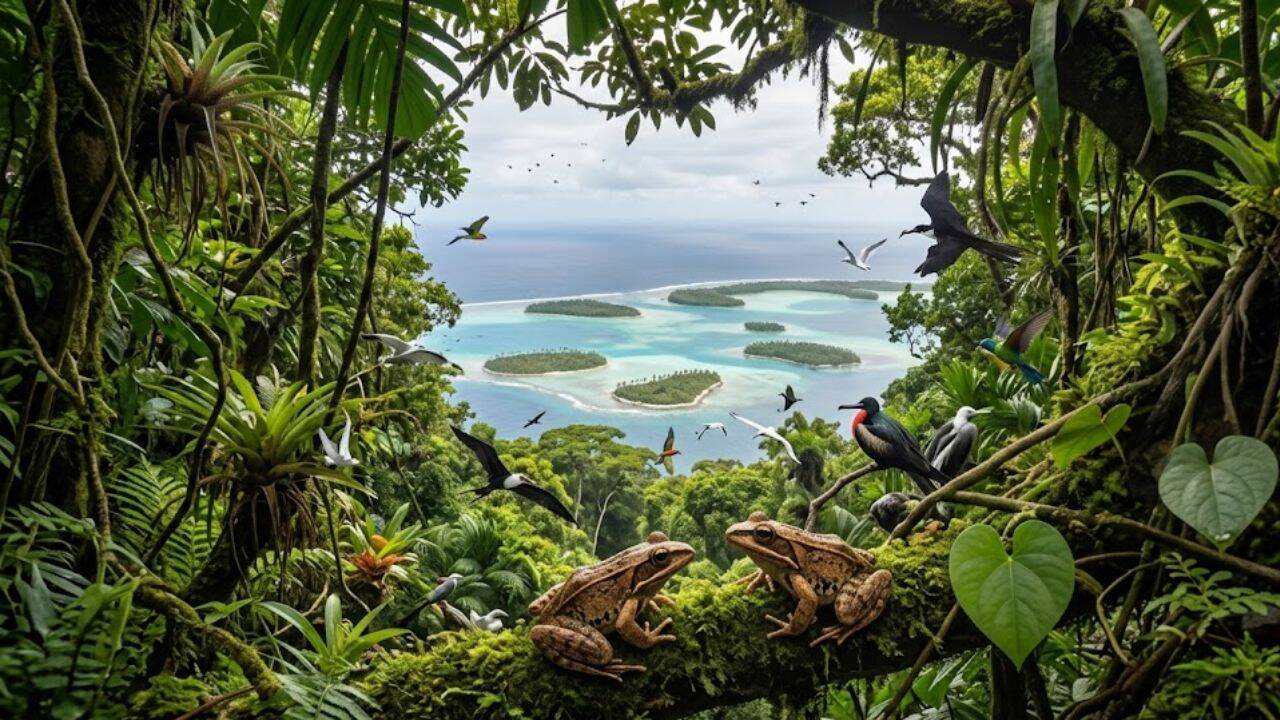
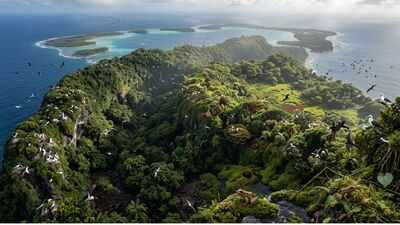
Atolls support 31 million seabirds across the Indo-Pacific region (PC: AI Generated)
Why are atolls so important to seabirds
Atolls offer seabirds places to breed, nest and raise young across tropical ocean regions. Their sandy islets can provide nesting habitat, while nearby waters supply food. The research found that seabirds may forage across areas extending more than 10,000 to 100,000 square kilometres around an atoll. This means the ecological importance of an atoll extends far beyond the narrow strip of land visible above the sea. Many seabirds spend much of their lives at sea but return to islands to reproduce. Because atolls are distributed across the Indo-Pacific, they can provide breeding locations for birds separated by vast distances. Protecting these sites therefore helps safeguard breeding populations that depend on specific islands during important stages of their life cycles.
Why seabirds are vital to atoll ecosystems
The study found seabirds also influence the ecosystems around atolls through the nutrients contained in their guano, or droppings. Researchers estimated that seabirds deposit an average of about 65,000 kilograms of nitrogen and 11,000 kilograms of phosphorus on each atoll each year. These nutrients can move through island ecosystems and nearby waters, supporting productivity in places where nutrients may otherwise be limited. The researchers describe seabirds as key nutrient pumps within the tropical Indo-Pacific because they transport nutrients from the ocean onto islands. This connection means seabird colonies can affect both terrestrial and marine environments. The loss of large colonies could therefore have ecological effects by cutting off an important source of nutrients across atoll ecosystems and surrounding waters.
Why protecting atolls matters for wildlife and people
Atolls have limited land compared with larger islands, yet they support wildlife and people, alongside local human communities. According to the BBC, around one million people live on coral atoll islands worldwide, with major populations in the Maldives, Kiribati, the Marshall Islands and Tuvalu. The research argues that conservation efforts should include protection and restoration of these islands because these sites hold a significant share of tropical seabird populations. Atolls are also vulnerable environments, with their low-lying land and limited resources leaving ecosystems sensitive to environmental change over time. The study’s findings show why their importance cannot be judged by land area alone. Protecting breeding sites, surrounding waters and healthy island ecosystems could help preserve millions of seabirds and the ecological functions they provide.