




Headlines
240,000 miles from Earth, Nasa is building the world’s first ‘space airport’ for the Moon, where spacecraft will have to queue for weeks to avoid traffic

240,000 miles from Earth, Nasa is building the world’s first ‘space airport’ for the Moon, where spacecraft will have to queue for weeks to avoid traffic |

Nearly 240,000 miles from Earth, Nasa is preparing a new kind of transportation hub where spacecraft could one day arrive, wait, dock and depart without a single runway, road or parking bay. The Gateway space station, planned for lunar orbit as part of the Artemis programme, is expected to host Orion crew capsules, lunar landers…

Read More
The human brain usually decays first after death, so how have thousands survived for 12,000 years? Scientists uncover the chemistry behind the mystery

The human brain usually decays first after death, so how have thousands survived for 12,000 years? Scientists uncover the chemistry behind the mystery

Representative Image (Canva) The human brain is one of the first organs to break down after death, making the discovery of preserved brains at archaeological sites particularly puzzling. Yet thousands of ancient human brains have survived long after other soft tissues disappeared, sometimes remaining as the only preserved soft tissue in otherwise skeletonised remains. New…

Read More
In 2017, an MIT class project explored a new kind of aircraft; it has now grown into an $850 million Ohio factory plan for an 8-motor hybrid plane that can take off from an area about the length of a soccer field

In 2017, an MIT class project explored a new kind of aircraft; it has now grown into an $850 million Ohio factory plan for an 8-motor hybrid plane that can take off from an area about the length of a soccer field

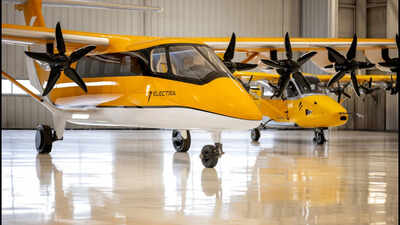
Electra takes a different approach to hybrid aviation. Instead of a traditional engine operating the propellers, the aircraft has a gas-powered generator in the nose. (Image: MIT News) A class project at the Massachusetts Institute of Technology (MIT) in 2017 studied a new type of aircraft; now, it has ballooned into a $850 million Ohio…

Read More
A cooling film developed at the University of Illinois was tested on Houston infrastructure for FIFA; treated metal roofs stayed over 40°F cooler in direct sunlight without using electricity

A cooling film developed at the University of Illinois was tested on Houston infrastructure for FIFA; treated metal roofs stayed over 40°F cooler in direct sunlight without using electricity |

In Houston, the heat is part of the setting. During the FIFA Fan Festival, though, some of the infrastructure around the event had a rather different experience of the Texas summer. Roofs treated with a thin cooling film stayed dramatically cooler than nearby untreated metal surfaces, even while sitting beneath direct sunlight.The material was not…

Read More
6,500 years ago, someone drilled a human tooth and wore it as a pendant; archaeologists found it sitting in a Serbian museum collection

6,500 years ago, someone drilled a human tooth and wore it as a pendant; archaeologists found it sitting in a Serbian museum collection

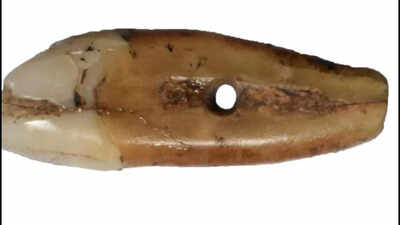
When archeologists found the tooth it was already damaged, measuring only 23 millimeters. Its crown had been split by agricultural activity into two parts. (Image Courtesy: N. Marković) It sat on a museum shelf for nearly twenty years, unseen, mistaken for something far more common. But now a closer look at a tiny, worn tooth…

Read More
1,500-year-old child burial unearthed in Peru with whistles, a rattle and a striking sculptural vessel, archaeologists uncover clues to an ancient civilisation’s rituals

1,500-year-old child burial unearthed in Peru with whistles, a rattle and a striking sculptural vessel, archaeologists uncover clues to an ancient civilisation’s rituals

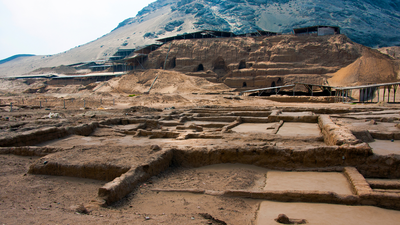
Huacas de Moche (Image Credit: Canva) Archaeologists working at the Huacas de Moche Archaeological Complex in northern Peru have uncovered the burial of an infant estimated to be about 1,500 years old. The child, approximately 1.5 years old, was buried with a funerary assemblage that included two whistles, a rattle and a sculptural vessel. Researchers…

Read More
In 2025, 11-year-old Touren Pope spotted a fossil exposed on the ground in Wyoming; it turned out to be a nearly complete 48-million-year-old turtle shell, and he was allowed to name it

In 2025, 11-year-old Touren Pope spotted a fossil exposed on the ground in Wyoming; it turned out to be a nearly complete 48-million-year-old turtle shell, and he was allowed to name it

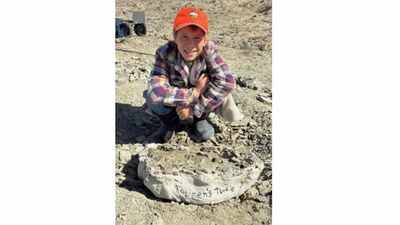
11-year-old Touren Pope finds 48-million-year-old turtle fossil in WyomingPhoto credit: Craig Thomas, BLM Rock Springs Field Office What began as a routine family rock-hounding trip in southwest Wyoming turned into a paleontological headline when 11-year-old Touren Pope noticed something unusual poking out of the ground. What he’d spotted was the fossilized shell of a softshell…

Read More
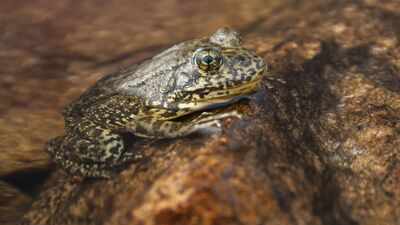
California releases more than 3,000 endangered mountain frogs into the wild, restoring a species that has lost most of its home

California releases more than 3,000 endangered mountain frogs into the wild, restoring a species that has lost most of its home |

Mountain yellow-legged frog. Image Credit: US Fish & Wildlife Service More than 3,000 endangered mountain yellow-legged frogs and tadpoles have been released into California’s mountain ranges in 2026, giving a once widespread amphibian another chance to survive in the wild. The reintroduction, carried out by the ‘San Diego Zoo Wildlife Alliance’ and its partners, is…

Read More
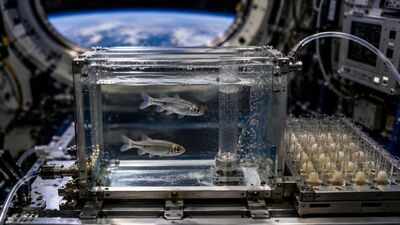
In 1973, Nasa sent two fish and 50 eggs into space; the unusual experiment helped reveal what happens to living organisms without gravity

In 1973, Nasa sent two fish and 50 eggs into space; the unusual experiment helped reveal what happens to living organisms without gravity |

When humans leave Earth, even something as basic as knowing which way is up can become confusing. That made fish surprisingly useful subjects for space research. In 1973, Nasa sent two mummichogs and 50 eggs aboard Skylab 3, giving scientists a chance to watch both adult fish and young that developed entirely in orbit. Soon…

Read More
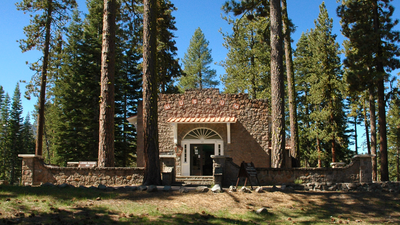
In 1929, Benjamin and Estella Loomis gave Lassen Volcanic National Park 40 acres, a museum and a seismograph building; they kept only a tiny lifetime lease, while their museum became the first privately built one donated to a US national park

In 1929, Benjamin and Estella Loomis gave Lassen Volcanic National Park 40 acres, a museum and a seismograph building; they kept only a tiny lifetime lease, while their museum became the first privately built one donated to a US national park

In 1929, local homesteader and photographer Benjamin Loomis and his wife, Estella, formally gave 40 acres of valuable mountain land to the United States government. The donation included a hand-built museum and a working seismograph station beside Manzanita Lake. The deal was the first known case in American history of a privately built museum being…

Read More
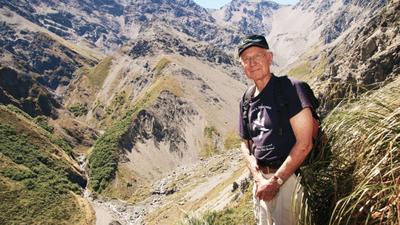
In 1965, a mountaineer found a dead seabird high in New Zealand’s mountains. Then, spent next 50 years to save its species from extinction

In 1965, a mountaineer found a dead seabird high in New Zealand’s mountains. Then, spent next 50 years to save its species from extinction |

PC: New Zealand’s Forest and Bird In 1965, Geoff Harrow walked into the Kaikōura mountains following a story about an unusual seabird nesting somewhere high above the valleys. He did not find the colony on his first attempt. The next morning, on a steep deer track, a decomposing bird provided the clue he needed. It…

Read More