







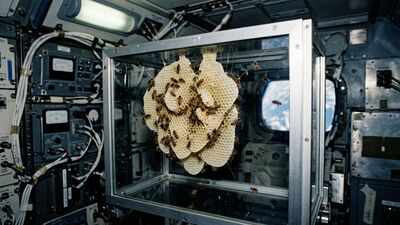
In 1984, Nasa sent thousands of honeybees into space to build a honeycomb without gravity, and the tiny colony eventually created 31 square inches of comb

In 1984, NASA sent thousands of honeybees into space to build a honeycomb without gravity, and the tiny colony eventually created 31 square inches of comb |

A small box of honeybees once became an unusual passenger aboard the space shuttle Discovery. In 1984, Nasa sent thousands of honeybees into orbit to see how they would behave when gravity was no longer guiding their movements. The experiment was less about honey and more about a basic piece of bee life: building a…
Read More
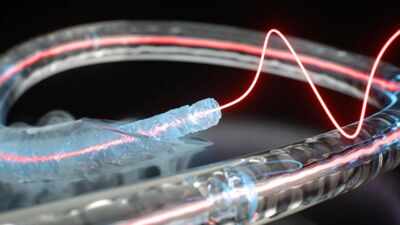
Freezing liquid inside optical fibre makes light and sound interact more than 1,000 times more strongly

Freezing liquid inside optical fibre makes light and sound interact more than 1,000 times more strongly

Representational photo of a frozen optical fiber core in a glass capillary, which guides and couples light and sound waves efficiently. (Science Daily picture) Freezing liquid inside an optical fibre has helped scientists create an unusual environment where light and sound can interact more than 1,000 times more strongly than they do in ordinary optical…

Read More
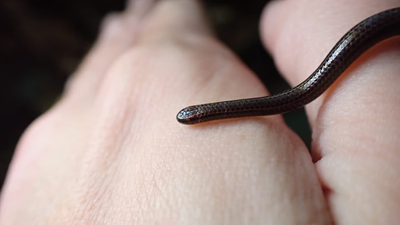
Scientists overturned hundreds of rocks in Barbados and finally found the world's smallest snake after 20 years

Scientists overturned hundreds of rocks in Barbados and finally found the world’s smallest snake after 20 years |

After nearly 20 years without a confirmed sighting, scientists in Barbados have finally rediscovered the world’s smallest-known snake. According to the Associated Press, the tiny Barbados threadsnake was found beneath a rock during an ecological survey in central Barbados, bringing an end to a search that had seen researchers turn over hundreds of rocks in…

Read More
In 2011, conservationists dropped 75 tonnes of poisoned bait on Henderson Island; only about 60–80 rats survived, but within two years their population was back to roughly two-thirds of its former level

In 2011, conservationists dropped 75 tonnes of poisoned bait on Henderson Island; only about 60–80 rats survived, but within two years their population was back to roughly two-thirds of its former level

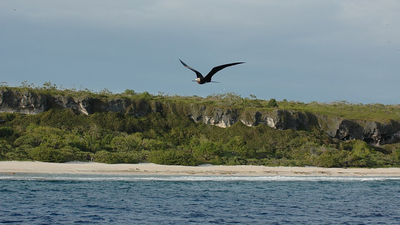
Henderson Island (Image credit: Canva) In 2011, Henderson Island, a remote and uninhabited island in the South Pacific, became the site of one of the largest rodent-eradication attempts ever undertaken on an island of its size. Conservationists spread about 75 tonnes of poisoned bait across the island in an effort to eliminate invasive Pacific rats,…

Read More
Chinese humanoid robots just beat Usain Bolt’s 100m record and the human high-jump record, are humans already losing to machines?

Chinese humanoid robots just beat Usain Bolt’s 100m record and the human high-jump record, are humans already losing to machines?

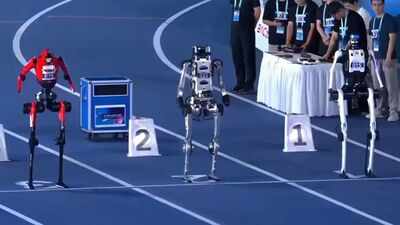
It seems technology is already outrunning humans not only in algorithms but also on the field. At a 100-meter sprint at the Beijing Robot Games, a humanoid robot is said to have beaten the human record of Jamaican athlete Usain Bolt. The robot named Lightning Bolt, achieved a result of 9.39 seconds, beating Bolt’s record…

Read More
Scotland recycles 72,000 contaminated single-use plastic bottles in a world-first move as new technology targets Petri dishes and pipette tips

Scottish Water: Scotland recycles 72,000 contaminated single-use plastic bottles in a world-first move as new technology targets Petri dishes and pipette tips |

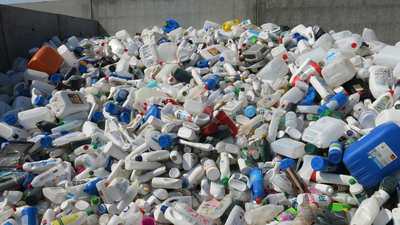
Scotland is taking a new approach to laboratory plastic waste. A new recycling system has already processed around 72,000 contaminated plastic sample bottles. The technology is now being expanded to Petri dishes and pipette tips. Scottish Water has become the first utility in the world to adopt Envetec Sustainable Technologies’ GENERATIONS technology. The system disinfects…

Read More
Singapore unveils world-first biological data centre with 16 million living human neurons powering 20 computers in a landmark moment for AI

Singapore unveils world-first biological data centre with 16 million living human neurons powering 20 computers in a landmark moment for AI |

Cortical Labs founder and CEO Hon Weng Chong at the Cortical Cloud biological data centre at NUS (Image: The Straits Times).. Singapore has unveiled a world-first biological data centre prototype that brings living human neurons into a server-rack environment, marking an unusual new step in the race to build more efficient and adaptive computing systems….

Read More
After months of tracking, volunteers found five leopard cats breeding in Changi’s forest, but Terminal 5 construction is forcing them to relocate

After months of tracking, volunteers found five leopard cats breeding in Changi’s forest, but Terminal 5 construction is forcing them to relocate |

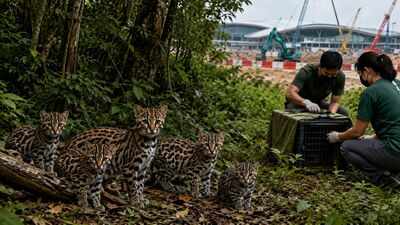
For months, the forest around Changi was being watched after dark. More than 50 volunteers, working with conservation groups and Singapore’s National Parks Board, set up cameras, collected evidence and searched for signs of one of the country’s most elusive wild cats. What they found was more significant than a handful of fleeting sightings. By…

Read More
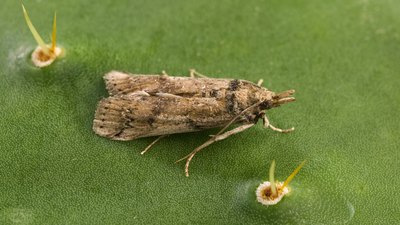
A cactus-eating moth released on Caribbean islands as biological control later reached Florida; since appearing there in 1989 it has spread west to Texas and become a threat to native prickly pears

A cactus-eating moth released on Caribbean islands as biological control later reached Florida; since appearing there in 1989 it has spread west to Texas and become a threat to native prickly pears

Cactoblastis cactorum, commonly known as the Argentine cactus moth An invasive South American moth that was once released as a biological control agent in the Caribbean is now spreading across the southern United States, creating a serious ecological and economic threat to native prickly pear cactus populations. The insect, Cactoblastis cactorum, commonly known as the…

Read More
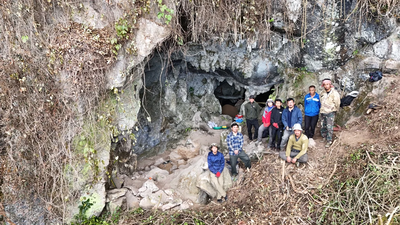
Northeast India’s human story may be 3,500 years older than previously thought: What archaeologists found in Nagaland's Noklak

Northeast India’s human story may be 3,500 years older than previously thought: What archaeologists found in Nagaland’s Noklak

The discovery was made during a March 2026 archaeological expedition. (Photo credit: Nagaland Tribune) A pottery fragment sticking out of a rock shelter in Nagaland may have changed what archaeologists know about the region’s past. Archaeologists working in Noklak district have found evidence suggesting that people were living in the region around 3,500 years ago,…

Read More
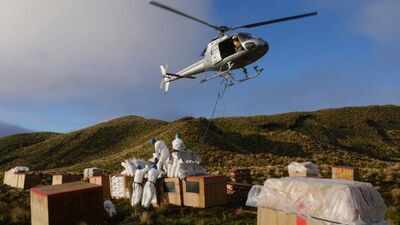
In 2016, New Zealand targeted an estimated 200,000 mice on Antipodes Island; two years later they were declared gone, and subsequent surveys found two native bird populations had more than doubled

In 2016, New Zealand targeted an estimated 200,000 mice on Antipodes Island; two years later they were declared gone, and subsequent surveys found two native bird populations had more than doubled

The team used helicopters to spread cereal bait containing the rodent toxin brodifacoum (Picture:   Mouse free marion) In 2016, New Zealand launched a major operation to remove an estimated 200,000 mice from the remote Antipodes Island. The mice were the only mammalian pest species on the island, but their impact on the ecosystem was…

Read More
From Thumba to tomorrow: Indian space programme is preparing for its biggest leap yet

Indian Space Programme: From Thumba to tomorrow: Indian space programme is preparing for its biggest leap yet

Indian space programme (representative image) BENGALURU: August 23, 2023, gave India an image it had waited decades to see: a spacecraft settling on the Moon, its lander and rover beginning work near the lunar south polar region. But the significance of Chandrayaan-3 was perhaps easier to understand if one looked backwards.Six decades earlier, India was…

Read More