







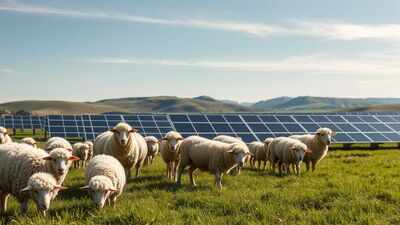
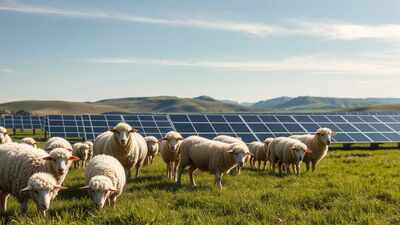
Across Texas, solar panels are appearing on land that has long been associated with farming and ranching, creating an unexpected overlap between energy production and agriculture. Instead of treating solar development as the end of a property’s agricultural use, some projects are finding ways to keep livestock and other activities on the same ground. Sheep grazing beneath panels has become one of the clearest examples. The approach is gaining attention as farmland becomes more expensive and the number of older agricultural producers rises.For farmers looking for affordable ways to expand, solar sites can offer access to acreage without requiring them to buy more land. At the same time, developers gain a practical way to manage vegetation around panels. In Texas, where solar capacity has grown rapidly, that shared use of land is turning an unusual idea into an emerging agricultural opportunity.
How Texas solar projects are creating space for agriculture
The Christiana Solar Farm, developed by Silicon Ranch, became a useful example of what can happen when agricultural activity is considered during the planning of a solar site rather than added once construction is finished.At the dedication of the project, the presence of livestock beneath the panels offered a fairly simple demonstration of the idea. Solar infrastructure does not necessarily mean the land has to stop functioning as agricultural ground.That distinction matters in Texas. The state has more utility-scale solar capacity than anywhere else in the country, while the price of working land has risen sharply. As reported by the American Farmland Trust, between 1997 and 2022, Texas working-land prices increased by more than 500%, with much of that rise occurring after 2017.For established landowners, higher values can make farmland an increasingly valuable asset. For someone trying to start a farm or expand a small ranch, the same trend can make acquiring enough acreage far harder.The problem is also tied to the age of the agricultural workforce. The average Texas agricultural producer was close to 60 years old in 2022. As older producers retire and land becomes more expensive, the question of who can afford to enter farming becomes harder to ignore.Agrivoltaics does not remove those pressures. It does, however, introduce another possible way of using land that is already being developed for energy.
How Texas farmers are turning solar sites into grazing ground
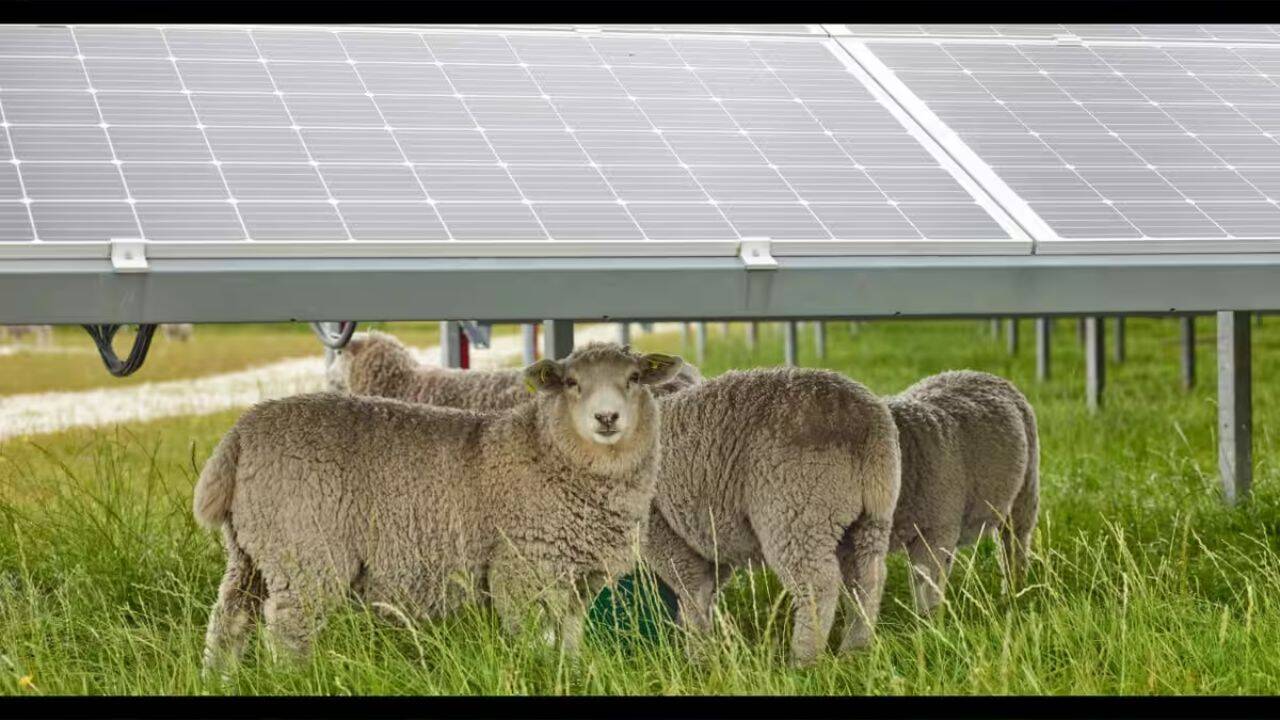
Sheep are particularly well suited to grazing around solar panels. They can keep vegetation under control without the machinery, fuel and labour that would otherwise be required to mow large sites. For solar operators, the animals provide a practical vegetation-management service. For graziers, the arrangement can create another source of income. A farmer with a grazing contract is not relying solely on the eventual sale of lambs or wool. The flock is also being paid to perform a job. The two activities can take place on the same acreage.Texas already has a sizeable solar-grazing industry. The American Solar Grazing Association’s 2024 census recorded more than 68,000 acres of solar sites being grazed in the state. The figure reflects an industry that has grown alongside the rapid expansion of solar generation.
A new way for Texas farmers to access land
A new farmer normally needs land before much else can happen. Buying it is increasingly difficult in areas where farmland competes with housing, commercial development and other uses. Renting can help, but long-term access to suitable acreage is not always easy to secure. A solar site can create a different arrangement.The land may remain under the ownership of a farmer or rancher while a solar developer leases it for energy production. If agricultural activity is incorporated into the project, a producer may then have an opportunity to use part of that site as well.For solar graziers, this can mean building a flock without first acquiring an enormous property. The income from grazing contracts can support the operation while the animals themselves remain part of a growing agricultural business.
How solar farm design can help agriculture
There is a significant difference between putting sheep on an existing solar farm and designing a solar project with farming in mind.If agriculture is considered late in the process, there may be little room for animals, equipment or people to move safely around the panels. Water infrastructure might not be available. Fencing may need to be changed. Panel layouts designed solely around electricity generation may make agricultural use awkward or uneconomic. Agrivoltaics takes the opposite approach.The panels, spacing, access routes and ground cover can be planned with agricultural production in mind. Depending on the site, that might involve grazing animals, growing crops, producing hay or supporting pollinators.
Solar grazing gives sheep farmers another source of income
There is also a wider agricultural question behind the growth of solar grazing. The United States imports more than 70% of the lamb consumed domestically. Expanding the number of sheep being raised in the country would require producers to have somewhere to keep them and a business model capable of supporting them.Solar grazing does not solve that supply problem by itself. It can, however, provide sheep producers with an additional revenue stream that conventional grazing does not offer. A flock on a solar site is doing two jobs at once. It is being raised as livestock while also helping maintain the property around the panels. For an established rancher, that may provide another source of income. For a new producer, it can potentially make the difference between owning a very small flock and being able to scale one.
Where Texas solar growth meets agriculture
The scale of the opportunity is partly a consequence of Texas’ unusual position in the American energy and agricultural landscape.The state has more than 230,000 farms and ranches and has become the country’s leading state for utility-scale solar capacity. Solar generation in Texas quadrupled between 2021 and 2025.