









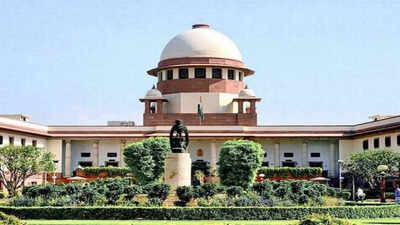
The Supreme Court on Wednesday sought a detailed account from the National Testing Agency (NTA) on the steps taken to implement recommendations aimed at strengthening the country’s examination system, making it clear that reforms in NEET cannot remain temporary fixes introduced after every controversy.A Bench of Justices PS Narasimha and Alok Aradhe directed Solicitor General Tushar Mehta to file a fresh affidavit outlining the measures taken by the NTA. The court was hearing petitions seeking structural reforms in the agency following controversies surrounding the conduct of the National Eligibility-cum-Entrance Test Undergraduate (NEET-UG).The court stressed that reforms in the NEET examination system must be institutionalised rather than dependent on temporary or ad-hoc arrangements. The observation assumes significance as the government moves to strengthen question-paper security, scrutiny mechanisms and administrative processes within the NTA.
Supreme Court seeks action on expert recommendations
The Bench asked the NTA to provide details of the steps taken to implement recommendations of the committee headed by former ISRO chairman K Radhakrishnan and the task force led by technology expert Nandan Nilekani.The Radhakrishnan committee was constituted following the 2024 NEET-UG controversy to examine vulnerabilities in the examination process and recommend measures to improve security, transparency, and the functioning of the NTA.The court’s latest intervention shifts the focus from merely announcing reforms to demonstrating whether they have actually been implemented.
Centre details safeguards in NEET question-paper process
The Centre told the court that several safeguards are already in place for preparing and transporting NEET question papers.According to the government, subject experts and moderators prepare questions for a common question bank. Experts are not informed about which questions will eventually be selected for the examination paper, a mechanism intended to ensure that no individual has access to the complete paper beforehand.The government also informed the court that vehicles transporting question papers are equipped with GPS devices to monitor their movement.However, the court’s insistence on institutional reforms indicates that individual safeguards alone may not be sufficient to address concerns surrounding the credibility of high-stakes examinations.
600 experts removed from NTA examination process
The Centre has meanwhile initiated several changes within the NTA.Around 600 subject experts associated with the agency’s examination work have been removed, with new experts being brought into the system. Another 20 to 25 officials are expected to join the agency over the next two to three weeks.The NTA is also introducing a four-tier question-paper scrutiny system. The additional checks are intended to identify factual, typographical, language, and translation-related errors before question papers reach candidates.The existing process already involves subject experts, psychometricians, and multiple rounds of review.
NTA offices to get tighter security
The agency’s offices will also be shifted from Okhla to the Government of India Press building on Minto Road in central Delhi. Security at NTA premises is expected to be strengthened through the deployment of Central Industrial Security Force (CISF) personnel.These measures come after repeated concerns over paper leaks, errors, and examination management involving major tests, including NEET-UG and UGC-NET.
Trust remains the real test
For students, the issue goes beyond question-paper preparation or administrative restructuring. NEET determines entry into medical education for millions of aspirants, making the credibility of every stage of the examination process critical.The Supreme Court’s message is therefore significant: reforms cannot be reactionary.The NTA now has to demonstrate that the recommendations made by expert bodies have translated into durable systems, clearly defined accountability, and stronger examination safeguards.For an agency entrusted with conducting some of India’s most consequential competitive examinations, restoring confidence will ultimately depend not on promises of change, but on whether those changes can consistently withstand scrutiny.