









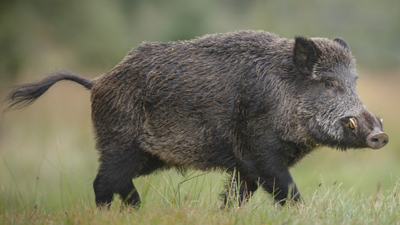
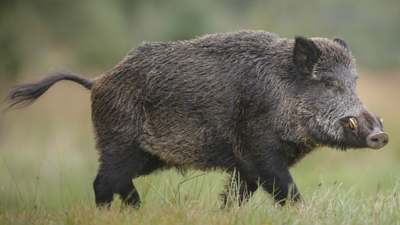
A shipment of European wild boars brought to a North Carolina hunting estate more than a century ago continues to cause serious ecological problems inside Great Smoky Mountains National Park. Park officials remove about 275 wild hogs every year to limit damage to fragile mountain habitats, according to data from the National Park Service’s species guide for the park. The animals trace their roots to 1912, when 13 wild boars arrived at a private 1,600 acre game preserve on Hooper Bald in Graham County, North Carolina. The preserve was created by George Gordon Moore, an adviser to English investors who owned local timber lands. The imported boars were kept alongside buffalo, elk, bears and thousands of game birds inside a fenced enclosure. However, the animals soon proved difficult to contain. Historical records from the North Carolina Wildlife Resources Commission say that during a hunt with dogs about eight to 10 years after their arrival, the frightened boars jumped over low sections of the rail fence and escaped into the surrounding mountain forests. By the late 1940s, the roaming animals had reached the area that became part of Great Smoky Mountains National Park. As they spread, they bred with feral domestic pigs left behind by former mountain homesteaders, producing a tough hybrid hog. The animals kept traits of their European ancestors, including long legs, coarse black coats, dark tusks and aggressive feeding habits.
Damage to high country ecosystems
The ecological damage became clear to park managers in the late 1950s. In a historical account published by the National Archives Prologue blog, supervisory archivist Patrick Connelly wrote that park rangers in the summer of 1959 found widespread root damage across the scenic high altitude balds. These grassy mountain tops, covered with native shrubs and rare flowering plants such as pink shell azaleas, were highly vulnerable to soil erosion. Park officials soon discovered that the non-native boars were moving to higher elevations to dig for grubs, earthworms and plant roots. Cattle grazing before the national park was created had helped produce large grub populations, making the balds major feeding areas for the hogs. Unlike native mammals, wild hogs use their strong snouts to dig through the topsoil. This rooting behavior destroys native wildflowers, damages young trees and changes the structure of the soil. It also encourages invasive weeds while reducing food sources such as acorns and hickory nuts for native animals including black bears and white-tailed deer. In response to the damage, park authorities began a two-part control programme in 1959. Working with game management officials from Tennessee, rangers used live traps and hired hunters to shoot free-roaming boars during weekly patrols. Officials also treated pastures to reduce grub populations.
Ongoing management and barriers to eradication
Despite decades of control efforts, completely removing wild hogs remains almost impossible because of the dense forests, steep mountain slopes and high reproductive rate of the animals. Female hogs can produce two litters a year, with as many as six piglets per litter. This allows populations to recover quickly when control efforts slow down. Today, the National Park Service uses live trapping, targeted shooting and protective fencing to protect the most sensitive plant communities. Captured animals are removed from the park, while temporary fences are placed around rare plant areas to stop hogs from reaching and damaging them. The agency works with wildlife departments in North Carolina and Tennessee, along with federal partners, to maintain control efforts. Wild hogs also create other risks. They can spread diseases such as pseudorabies and swine brucellosis to livestock in nearby farming communities. They also pollute streams and springs by rolling in mud to cool themselves during summer, increasing water turbidity and damaging small aquatic habitats. More than 110 years after a group of animals escaped from a private hunting enclosure in western North Carolina, the descendants of those European wild boars remain one of the most difficult wildlife management problems in the American South.