











Finnegan McGill has spent more than four years turning a concern about declining bird populations into a working piece of technology. This 18-year-old student from Tucson, Arizona, developed a device known as ‘A-BiRD’ (Automated Bird Recognition Device) which could help in identifying birds by their calls and find out where those calls are coming from. He created a model to make bird monitoring more detailed and less dependent on people watching and listening in the field. The Society for Science says the device has already been tested during fall migration in Tucson, where two of these devices gathered information about local bird populations and how birds used different habitats. This project was inspired by a family concern shared with his grandfather about birds.
What is the working concept of Finnegan Mcgill ’s A-BiRD
A-BiRD is designed to solve two problems at once. These include identifying which bird is making a sound and determining where that bird is located. The ‘Society for Science’ explains that the device uses open-source code from Cornell University to identify bird species from their sounds. McGill then created his own algorithm to estimate the location of a bird by examining the timing of its sound as it reaches different microphones.In simple terms, the system listens for a bird call and analyses the sound rather than relying on someone to see the bird. It can then use differences in when the sound reaches the microphones to estimate the direction from which the call came. That combination is important because identifying a bird is only part of understanding how it uses an environment. Knowing where the sound originated can provide another layer of information about bird activity and habitat use.
How did McGill test the device
McGill put A-BiRD into the field during fall migration in Tucson. As per the Society for Science, he deployed two devices to collect information about bird populations during the migration period. The data collected by the devices were handled and visualised using open-source tools. This allowed McGill to examine the information and look at how birds were using different habitats.The results showed that A-BiRD could provide detailed information about bird activity. The project therefore moved beyond the idea of simply recognising bird calls and towards using those sounds as a way of studying animal populations. It is one of the more interesting aspects of McGill’s work that a device turns something as ordinary as birdsong into information that can be analysed.
Why could automated bird monitoring be useful
The Society for Science notes that bird monitoring can be affected by observer bias, difficulties in identifying species and their locations, and uneven coverage across different places, seasons and times of day. A-BiRD is intended to help address some of those challenges by collecting information through sound. Rather than depending entirely on people being in the right place at the right moment, the device can gather recordings and process the resulting information. That could make it possible to build a more detailed picture of how birds use particular habitats. It could also help researchers follow changes in bird populations over time. The Society for Science says McGill’s work suggests that similar devices could eventually be useful for studying other animals that produce sounds.
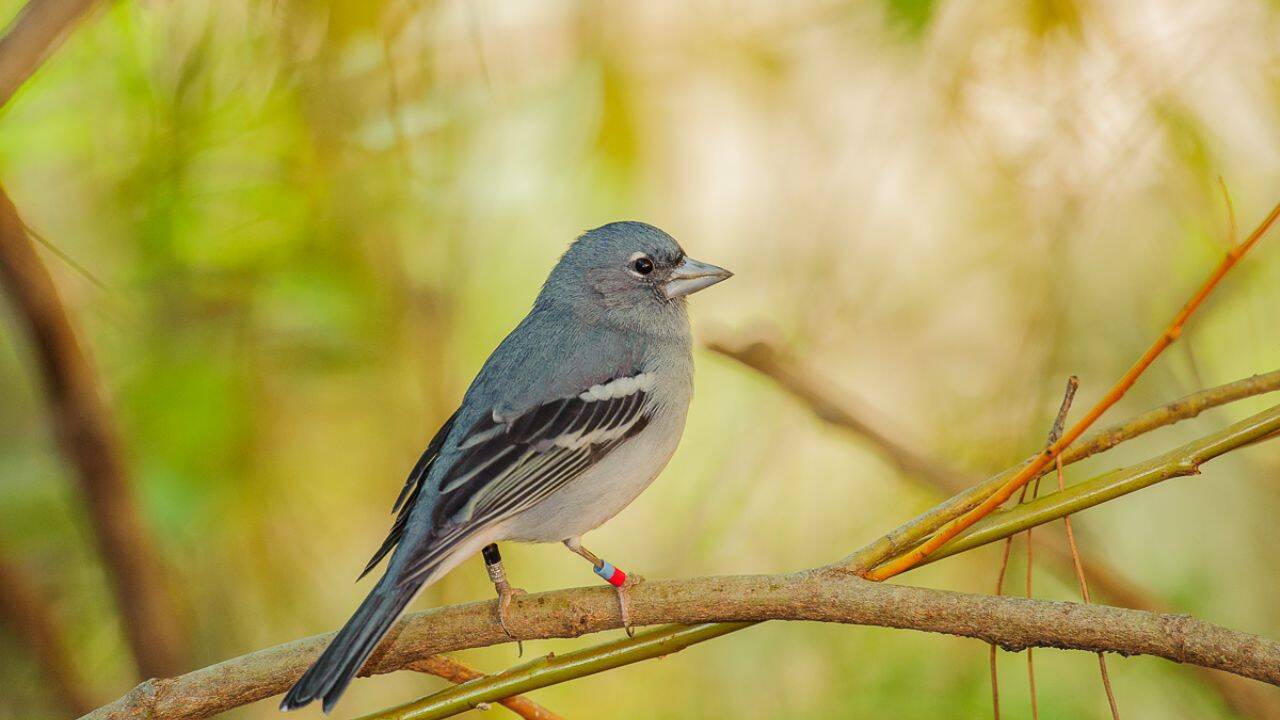
Gran Canaria blue chaffinch, an example of a bird highly specialised in its habitat. Image Credit: Miguel Angel Peña Estévez/Wikipedia
Could A-BiRD change how birds are studied
A-BiRD does not replace traditional bird monitoring but McGill’s work shows how technology could make acoustic monitoring more useful. By combining bird-call recognition with location estimates, the device can produce information about both what species are present and where their sounds originate. It also suggests that the same basic approach could eventually be adapted for other sound-producing animals.
Inspiration for Mcgill’s work and his journey till now
According to the Society for Science, McGill’s grandfather inspired the project with both of them sharing concerns about declining bird populations. That concern eventually became a long-term science project, which was already gaining recognition before McGill became a finalist in the ‘2026 Regeneron Science Talent Search.’ The 2024 ‘18 Under 18 programme’ lists McGill among Arizona’s young people recognised for their achievements. For McGill however, A-BiRD was not simply a school project. He spent years developing the device into a system that could gather useful information about birds without requiring a person to be present every time a bird called.Outside the project, McGill is also active at Tanque Verde High School where he serves as student body president, homecoming king and captain of the cross-country team. The Society for Science also notes that he works as a junior therapy dog handler by taking his dog to places such as hospitals, schools and nursing homes to provide comfort. For an 18-year-old who began developing the idea years earlier, A-BiRD represents more than a clever device. It is an example of how a concern about the natural world can grow into a sustained scientific project.
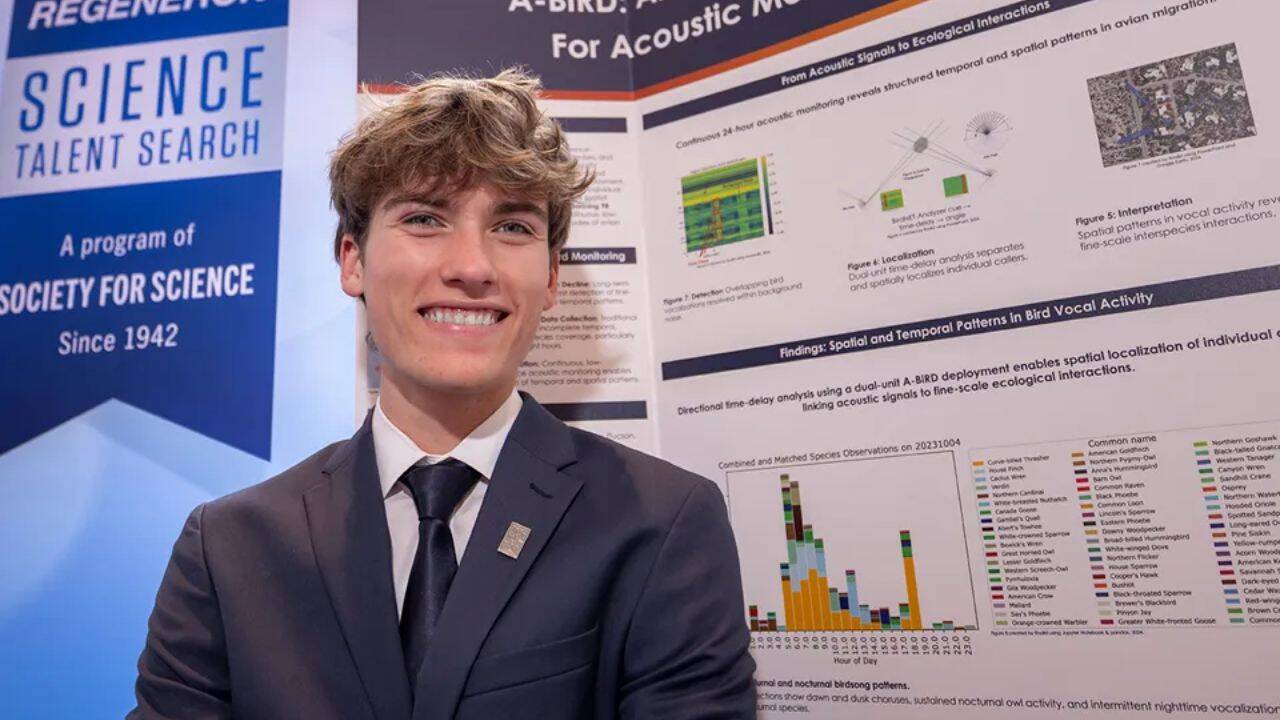
Image Credit: Chris Ayers/Society for Science