










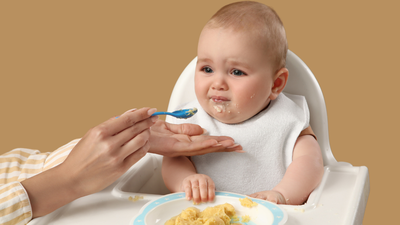
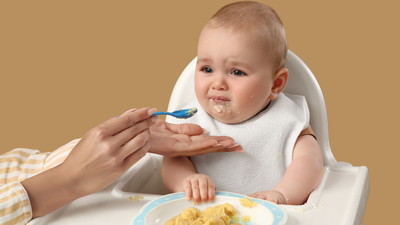
For new parents, feeding a baby can come with a surprising amount of second-guessing. Is the baby drinking enough? Should you offer another ounce? What if the bottle is not finished? And if the baby seems hungry again soon after a feed, does that mean they need more milk?One question that often gets lost in all these calculations is: Can a baby actually be overfed? Yes, it is possible. But that does not mean parents need to obsess over every feed or worry whenever their baby takes a little more milk than usual. Babies have their own hunger and fullness signals, and learning to recognise them may be more useful than following a rigid number on the bottle.
28 Jul 2026 | 16:27
What was the most useful baby product during the first six months?
Research on infant feeding increasingly supports what is known as responsive feeding- allowing the baby to communicate when they are hungry and when they have had enough, while the caregiver responds to those signals. The American Academy of Pediatrics (AAP) describes this as a two-way process in which parents provide the food while babies help determine how much they consume.

File photo: Canva
Babies have their own “I’m full” signals
Long before babies can say “I’m done”, they have other ways of communicating it. A baby who has had enough may:
- Turn their head away from the breast or bottle
- Close their mouth
- Stop sucking or become less interested in feeding
- Relax their hands and body
- Become distracted or push the bottle away
Hunger cues can look different. Babies may bring their hands to their mouth, turn towards the breast or bottle, lick or pucker their lips, or become more alert.Crying, meanwhile, is often a later sign of hunger.The AAP recommends paying attention to these hunger and satiety cues rather than treating feeding as a fixed exercise in finishing a predetermined quantity.
Why bottle feeding needs a little extra attention
This does not mean formula feeding is bad or that breastfed babies cannot be overfed. It simply means the mechanics of bottle feeding can sometimes make it easier to overlook a baby’s fullness cues.A bottle continues to contain milk even when the baby has begun slowing down. A caregiver may also unintentionally encourage the baby to keep drinking because they are worried about wasting formula or believe the baby needs to finish the feed.A review of infant formula-feeding practices published in Pediatrics, the official journal of the American Academy of Pediatrics, found that bottle-related behaviours and caregiver feeding practices may influence rapid weight gain. The researchers also noted that infants generally show fairly consistent satiety signals, although factors such as temperament and how caregivers interpret those signals can affect how feeding unfolds.This is where paced bottle feeding can be useful. Instead of rushing the feed, parents can give the baby opportunities to pause, slow down and decide whether they want to continue.
What about breastfeeding?
Frequent breastfeeding does not automatically mean a baby is being overfed. Newborns often feed frequently, and their feeding patterns can change during growth spurts, illness and other stages of development. Breastfeeding also allows the baby to participate actively in controlling the pace and duration of feeding.That said, breastfeeding parents can still benefit from watching their baby’s cues rather than assuming that every fuss means hunger.Sometimes a baby wants to be held, comforted, burped or simply needs a change of environment. Feeding is one way babies communicate and seek comfort, but it is not necessarily the answer to every cry.
Does spit-up mean the baby has eaten too much?
Spitting up is extremely common in young babies and, by itself, does not prove that a baby has been overfed. A small amount of milk coming back up after a feed can happen even when the baby has eaten an appropriate amount. What matters is the overall pattern. If vomiting is frequent or forceful, the baby seems to be in significant discomfort, refuses feeds, is unusually sleepy, has fewer wet diapers or is not gaining weight appropriately, parents should speak with their pediatrician.

File photo: Canva
The biggest mistake? Turning every feed into a numbers game
Perhaps the most reassuring takeaway for parents is this: your baby does not have to finish every bottle. If the baby turns away, closes their mouth or stops sucking, that may simply be their way of saying they are finished.The AAP’s responsive-feeding approach essentially puts the roles this way: the caregiver decides what and when to offer, while the baby communicates how much they need. Research and pediatric guidance increasingly support paying attention to these internal hunger and fullness cues rather than relying only on external signals such as the clock or the amount left in a bottle.For exhausted new parents, that may be easier said than done. Feeding a baby is full of uncertainty, and there will be days when feeds seem completely unpredictable.But instead of asking, “Did my baby finish the bottle?”, it may be more helpful to ask, “Is my baby showing me that they are still hungry?” That small change in perspective can make feeding less about hitting a number- and more about listening to the baby.Note: This article is for general information and is not a substitute for medical advice. If you are concerned about your baby’s feeding, vomiting, wet diapers or growth, consult your pediatrician.