








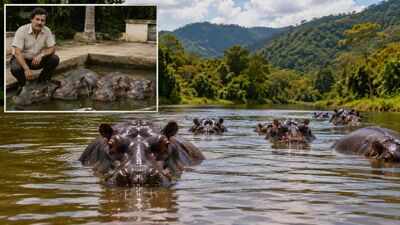
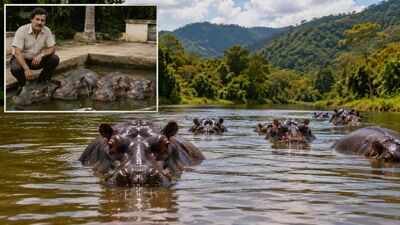
For years, the hippos wandering through central Colombia were treated as an unusual reminder of the country’s past. They had not arrived through natural migration or conservation efforts, but as part of a private collection of exotic animals assembled decades ago. What began with only a few individuals has gradually become something much larger. The animals found conditions that suited them, with abundant water, warm temperatures and few natural pressures to keep their numbers in check. As their population expanded, their presence shifted from being a curiosity to becoming an ecological concern. Attention has increasingly turned away from the spectacle of free-roaming hippos and towards the quieter changes taking place beneath the surface of the rivers and lakes they now occupy.
How four imported hippos became a growing wild population
This began in the late 1980s when Colombian drug trafficker Pablo Escobar imported several wild animals for his private estate, Hacienda Nápoles, east of Medellín. Among them were four common hippos, a species native to sub-Saharan Africa and never intended to exist in South America.According to The Wildlife Society, after Escobar’s death in 1993, many of the estate’s animals were removed or relocated. The hippos proved to be a different challenge. Their size, strength and specialised transport requirements made moving them difficult and expensive, so they remained where they were. Over time they wandered beyond the boundaries of the former estate and established themselves in nearby rivers and wetlands.Without large predators and with favourable environmental conditions, the small founding group reproduced steadily. Within a few decades, the population had grown to more than 80 animals, making it the largest known population of invasive hippos anywhere in the world.
How hippos are changing Colombia’s rivers
The animals spend much of their lives in water, resting during the day before grazing on land after dark. This daily routine has consequences that extend beyond the hippos themselves.Large quantities of dung and urine enter the water each day. As this organic material breaks down, it changes the chemical balance of rivers and lakes. The study published in Nature, titled ‘Organic matter loading by hippopotami causes subsidy overload resulting in downstream hypoxia and fish kills’ found that waterways occupied by hippos showed shifts in oxygen levels, nutrient concentrations and overall water chemistry compared with areas where the animals were absent.These changes are especially noticeable in slower-moving sections of rivers, where waste can accumulate more easily. Reduced oxygen in the water can affect fish and other aquatic organisms that depend on stable conditions to survive.
The growing risk of harmful algal blooms
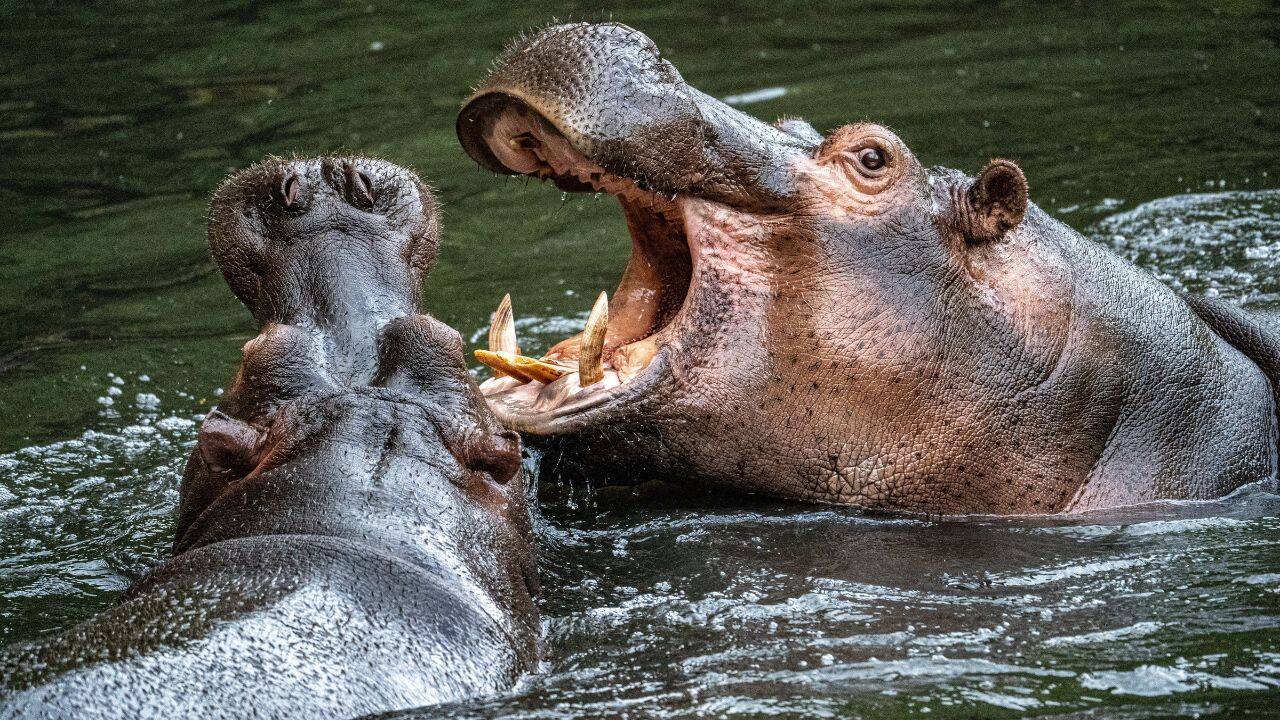
Nutrients from hippo dung prove to be a highly effective means of fertilisation in the aquatic ecosystem. Although nutrients naturally occur in freshwater bodies, an excessively high level of their presence may disrupt the natural balance.A higher level of nitrogen and phosphorus may cause faster growth of algae. In some circumstances, it results in the formation of harmful algal blooms, which consist of toxic forms of algae. This will further reduce the oxygen level in the water as algae blooms decompose.The impacts do not emerge immediately but rather occur progressively due to the repeated presence of excess nutrients throughout many months and years.
Why hippos stand apart from other invasive species
Most of the invasive species that have been introduced into ecosystems are generally quite small and may take a lot of time before the adverse impact is noticeable. This is not the case with the hippopotamus because an adult hippo weighs more than one ton and consumes a large amount of vegetation and wastes per day.The impact of the animal is both on land and water since grazing impacts vegetation on land, its movement creates paths on the banks of rivers, and all of this combined with changes below the water impacts various parts of the ecosystem.Managing a growing populationThe more hippos there are, the more difficult it becomes to control them. The process of catching and transporting them is costly and technically challenging, but letting them multiply further means creating even bigger problems in terms of their potential impact on the environment.Research on the impact of the creatures on the Colombian environment was conducted by scientists, who analysed the water quality in order to estimate the scale of the problem.