









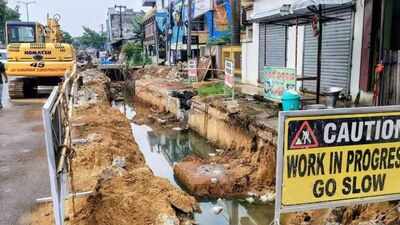
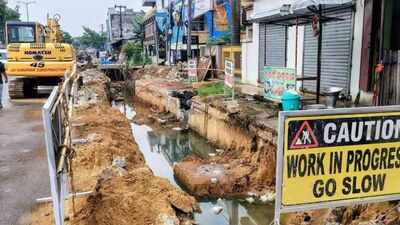
Every year, just after a road is opened to traffic, excavators return. The municipality may resurface a stretch only to see it dug up within weeks to lay a water pipeline, fix a sewer, lay an electricity cable, expand a gas network or pull fibre-optic lines for telecommunications companies. The cycle is so frequent that for millions of commuters, road digging is a permanent feature, not an occasional inconvenience.
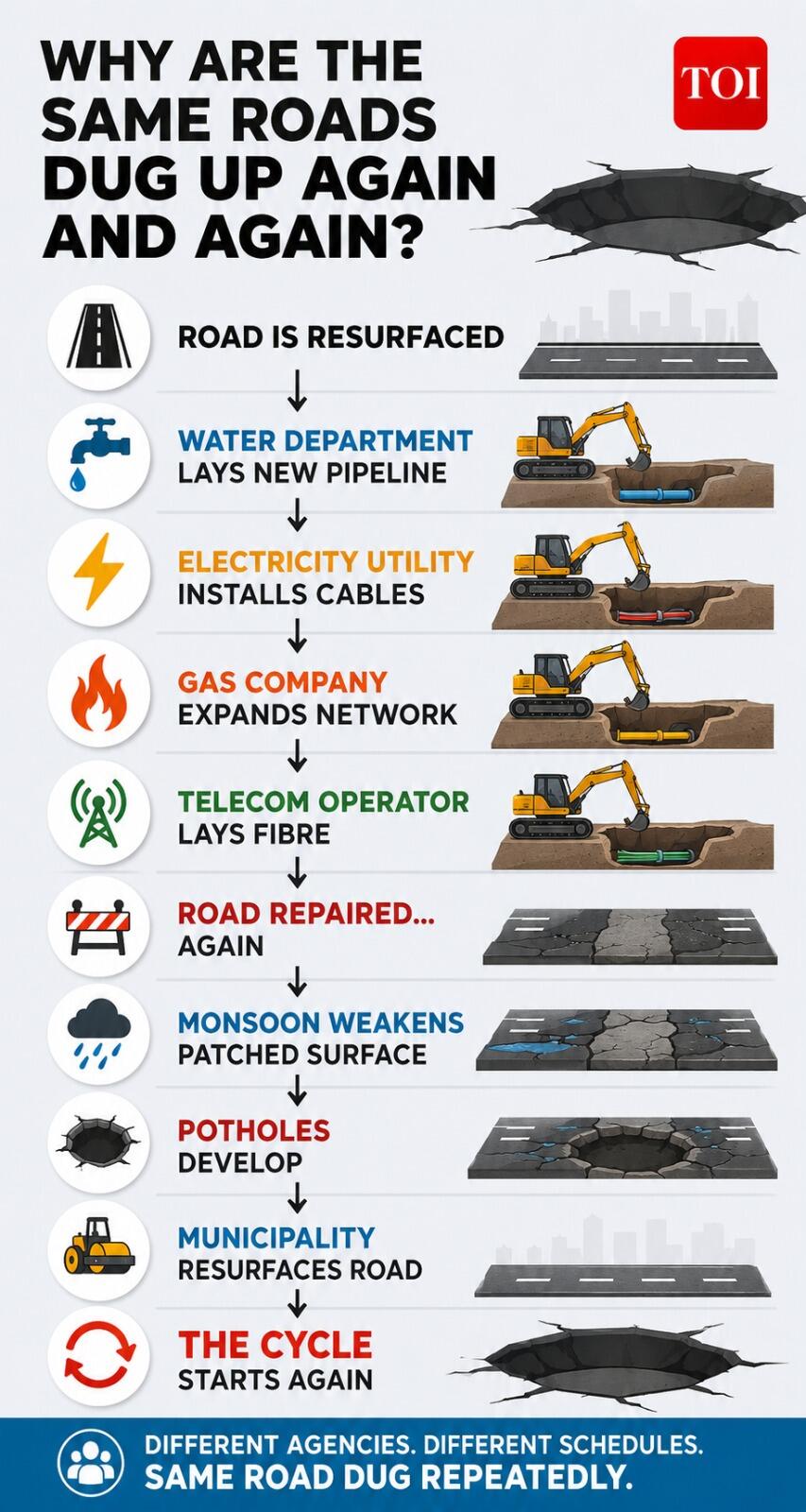
While authorities often point to pressing infrastructure needs, urban planners say the real problem lies in the lack of coordination among the multiple agencies responsible for India’s fast-growing cities.A familiar urban nightmare played out across IndiaWhether it is Delhi, Bengaluru, Mumbai, Hyderabad, Chennai, Pune or Kolkata, residents are used to navigating through barricades, diversions and half-dug roads. Many times, a road paid for with public funds is good for one season, and then another department digs it up.
Municipal corporations usually look after road maintenance, while water supply, sewerage boards, electricity distribution companies, gas utilities and telecom operators are often run separately, each to their own timetable with little synchronisation. The result is more digging up of the same bit of road, long traffic jams and roads that never really recover even after they have been mended. The urban experts have long argued that India’s infrastructure challenge is no longer simply one of building assets but of managing them through better coordination.
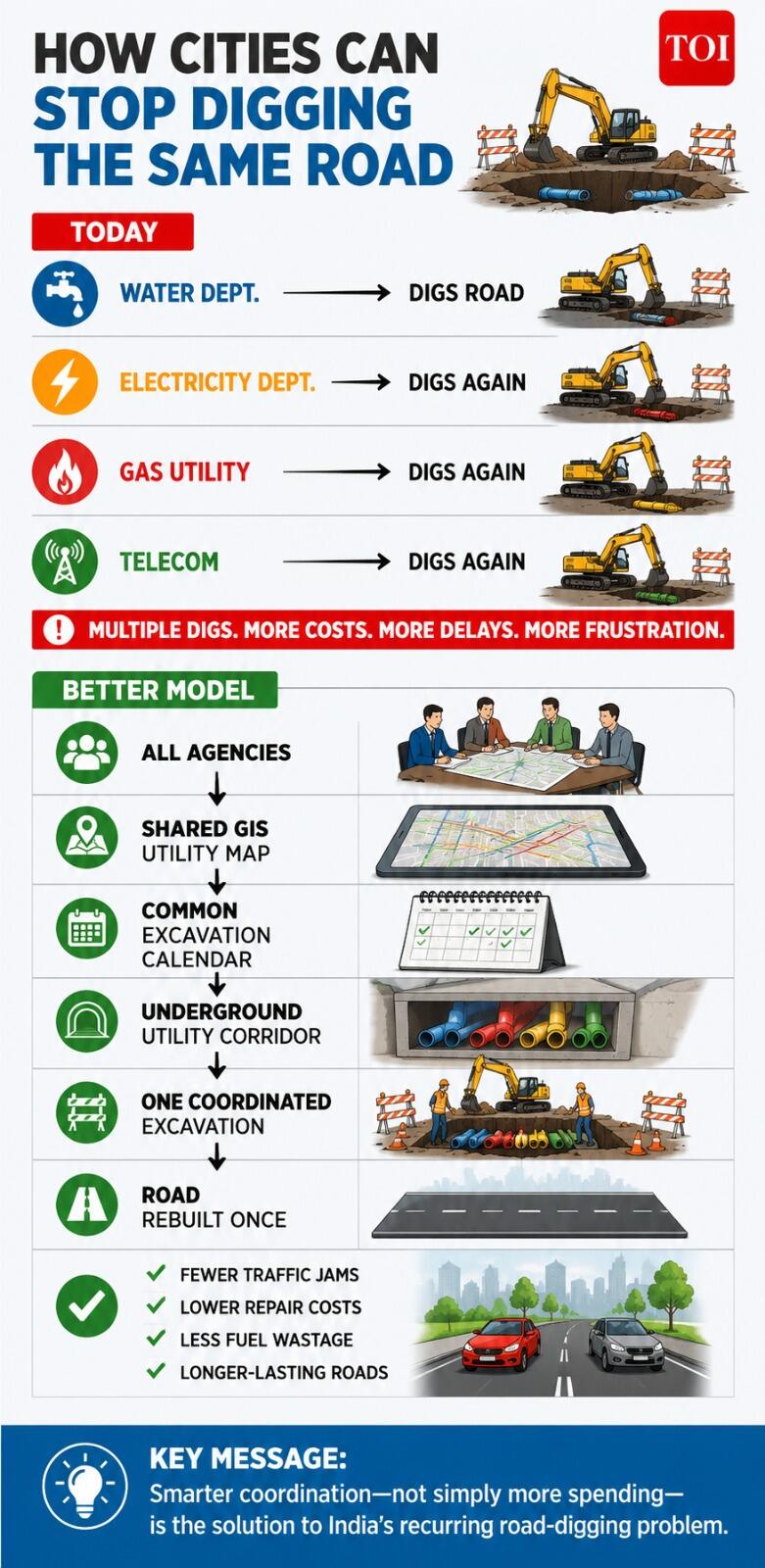
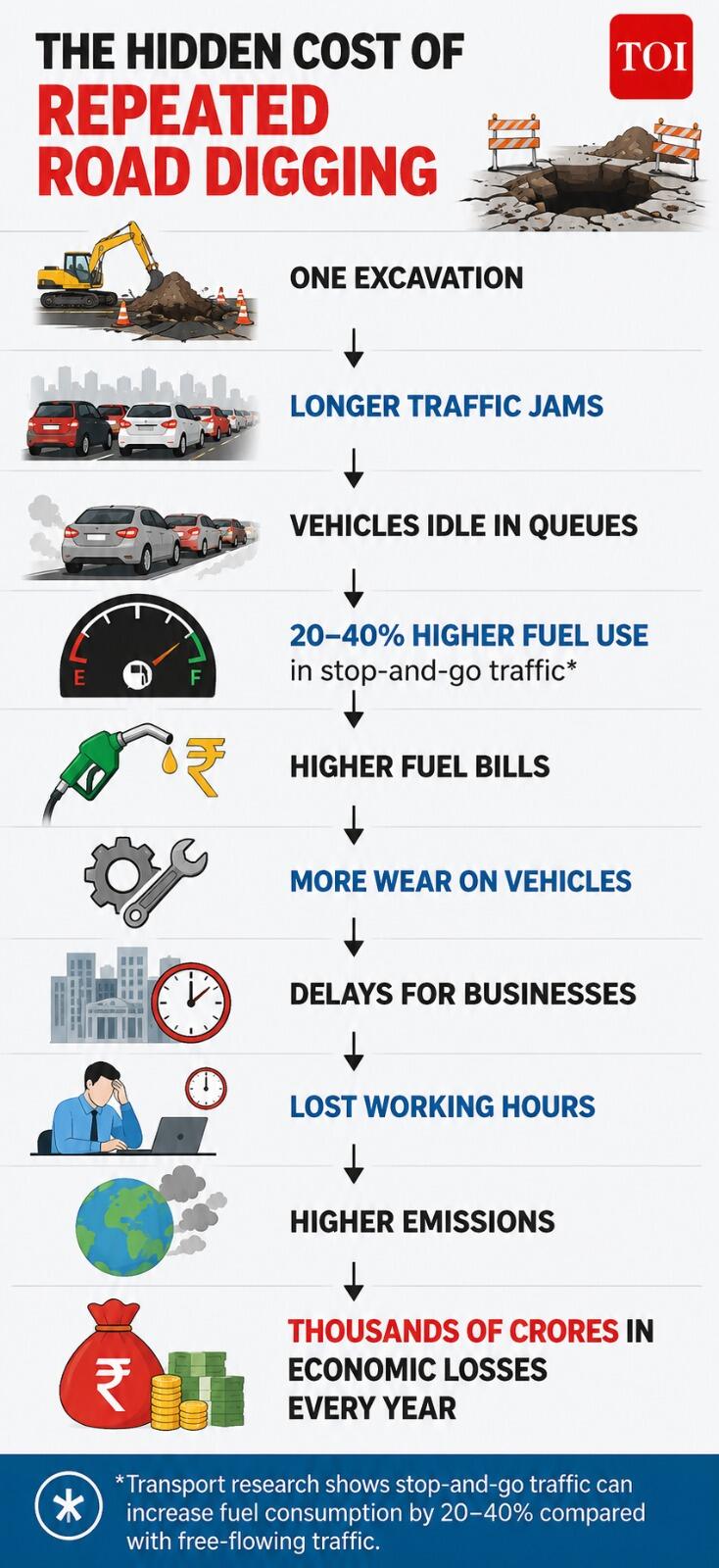
Too many agencies, too little planningThe problem is even worse in large metropolitan areas where responsibility for underground infrastructure is split among dozens of government departments and utility providers. Municipal corporations build and maintain roads, water departments replace pipelines, electricity utilities lay underground cables, city gas distributors expand piped natural gas networks and telecom companies continue to install fibre networks to meet the growing demand for data.Each project may be justified in its own right, but done without a common calendar and without common digital mapping, roads are dug up time and time again. Some cities have tried to introduce “common utility corridors” or integrated utility maps, but implementation has been patchy as agencies often operate under different governments, funding mechanisms and contractors.The economic cost is far greater than building billsThe visible repair costs are much lower than the costs of digging up the road time and time again. India consumes over 50 billion litres of petrol every year, apart from significant diesel consumption by commercial vehicles, according to the Ministry of Road Transport and Highways. Traffic engineers estimate the increased congestion created by road works causes a major rise in fuel wastage as vehicles are left idling in queues or crawling through bottlenecks. Transport researchers have shown time and again that stop-and-go traffic can increase fuel consumption by 20-40% compared to free-flowing conditions, and also lead to higher emissions. Even a small fraction of the fuel used in cities due to recurring excavation-related congestion, the economic cost of wasted fuel, lost productivity and increased vehicle maintenance amounts to thousands of crore every year.Road congestion is becoming an invisible urban taxMost often the biggest loss is not money, but time. Traffic congestion is becoming one of the costliest urban problems in India, especially in cities where millions of people commute every day. Bengaluru is consistently ranked among the most traffic-congested cities in the world in global traffic studies, while Delhi, Mumbai and Pune also see significant delays during peak hours. Unplanned excavations cut road capacity, force traffic detours and create bottlenecks that last weeks, even months. Delivery times for business are affected, emergency vehicle access is impeded, and commuters are delayed on their journeys, all of which can lead to productivity and stress issues. More and more, economists talk about congestion as an “invisible tax” that cities impose on their own residents.Repeated excavation also deteriorates road qualityRoad engineers say a road that’s dug up and repaired won’t be as strong as it was structurally unless it is rebuilt to strict standards. Over time, trenches often settle unevenly, creating depressions, potholes and rough patches that are exacerbated during the monsoon. Badly repaired joints leak water, weakening the road base and accelerating deterioration. Then the municipalities spend public money repaving the same roads only to have them ripped open later for yet another utility project. This cyclical process increases maintenance costs and shortens the useful life of valuable taxpayer-funded road infrastructure.The problem can be mitigated by digital mapping, and common utility corridorsMany countries require agencies to coordinate projects before resurfacing a road, and have produced detailed underground utility maps for reducing repeated excavation. Some Indian cities have started experimenting with Geographic Information System (GIS)-based utility mapping and integrated permissions and common utility ducts allowing multiple services to share underground corridors. The Union government’s Smart Cities Mission also encouraged digital urban infrastructure planning in a number of cities. But experts say the problem will not be solved by technology alone unless all utility agencies are required by law to share project schedules and to complete underground work before roads are rebuilt. Absent mandatory coordination, digital platforms may become yet another government initiative underutilized.Growing cities need smarter governance, not more infrastructureIndia’s urban population is expected to cross 600 million by 2036, putting unprecedented pressure on roads and underground utilities, according to the Ministry of Housing and Urban Affairs. As cities expand, water supply, electricity, gas and telecom networks are still being expanded and excavation is inevitable. The question is whether these projects can be planned in parallel instead of separately. Every unnecessary road cut is a waste of public money, a waste of fuel, a waste of emissions, and a waste of countless hours of traffic. Indian cities are spending billions on new infrastructure, but the challenge is no longer just building roads, but making sure they are dug only once, with every agency working from the same plan.