








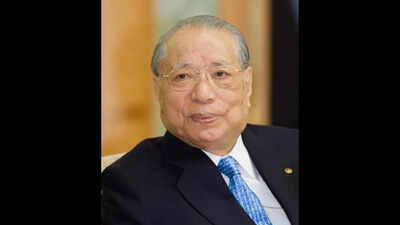
Famous Japanese Buddhist philosopher Daisaku Ikeda, who is known for turning Soka Gakkai into a massive international organization, made a happy and peaceful life look simple. He said a peaceful life does not mean a life free of toil and suffering; rather, it means living without being swayed no matter what happens. This is a state of true peace and happiness.
What does the quote mean?
True peace is not a passive state where everything goes smoothly, but it is an active inner strength that stays calm through challenges. This stands opposite to what people generally believe.Most people define peace as the absence of trouble. They believe they will finally be peaceful when their work stress ends, their health problems resolve, or their financial worries disappear. This quote turns that common idea upside down. It asserts that waiting for a life completely free of effort and suffering is a trap, because life by its very nature brings unexpected obstacles, hard work, and emotional pain. If your peace depends on everything outside of you being perfectly calm, you will spend your whole life at the mercy of shifting circumstances.
Peace that lives inside you
True peace is the ability to remain balanced, grounded, and clear-headed regardless of what happens around you. It is about building an unshakable mindset. When severe weather hits, a shallow tree gets pulled out of the soil by its roots, but a deeply rooted tree sways with the wind without breaking. Living without being swayed means you develop roots deep enough to withstand emotional and situational storms. You still feel the pain, and you still do the hard work required to handle your life, but those difficulties do not destroy your inner composure or rob you of your purpose.The quote also redefines happiness. Many people confuse short-term pleasure with real happiness. Pleasure depends on external triggers like praise, comfort, or success. When those triggers vanish, the pleasure disappears with them, often leaving behind fear or disappointment. Real happiness, as described in the quote, is closely tied to resilience. It comes from knowing that your sense of self and your emotional stability do not depend on external validation or smooth sailing. It is the steady confidence that comes from facing difficulties without losing your center.
Who was Daisaku Ikeda?
Daisaku Ikeda (1928–2023) was an influential Japanese Buddhist philosopher, educator, author, and peacebuilder. Best known as the founding president of Soka Gakkai International, he transformed a localized Japanese lay movement into one of the world’s largest community-based Buddhist organizations, spanning around 190 countries and territories.Born in Tokyo to a family of seaweed farmers, Ikeda’s youth was heavily shaped by the devastation of World War II. The conflict inspired a lifelong dedication to rooting out human suffering and fostering global peace. In 1947, he met Josei Toda, the second president of Soka Gakkai, who became his mentor. Following Toda’s death, Ikeda assumed the presidency in 1960 at age 32. Under his leadership, the organization expanded beyond religious practice to engage deeply in educational, cultural, and human rights initiatives worldwide.At the core of Ikeda’s philosophy was the concept of “human revolution”, the idea that a self-directed, positive transformation within an individual can ultimately lead to positive change in society. He championed dialogue as the primary tool for overcoming cultural, political, and ideological divisions. Beginning in the 1970s, he engaged in published conversations with world figures, scholars, and leaders, including British historian Arnold J. Toynbee and former Soviet President Mikhail Gorbachev.