












The global energy landscape is rapidly changing as the dangers of fossil fuels are becoming visible to researchers and the public. As traditional energy sources will probably diminish by the year 2088, the search for renewable options has expanded from wind and solar farms to personal, wearable technology. A prime example of this capability is Angelo Casimiro, a teenager from the Philippines who, at the age of just 15, designed a fully functional shoe that generates electricity while the wearer walks, runs, or plays sports. He realised that billions of steps are taken every second around the world, and what if this movement could be used to power our everyday gadgets. By placing two pressure-sensitive generators on each insole, he was able to double the energy captured without increasing the size of the shoe.
What is the science behind the electricity produced by footsteps
The central phenomenon is known as piezoelectricity. As Vesa Aho explains in the thesis ‘Insole Energy Harvesting from Human Movement Using Piezoelectric Generators‘, this effect was first discovered in 1880 by the Curie brothers. The term is defined as ‘certain materials that induce an electric field when they are subjected to mechanical force or pressure.’ When you step down on these materials, the internal structure deforms, causing a movement of ions that creates an electric charge.This process is a highly efficient way to transform mechanical energy into useful electrical energy. The core idea is that pressure equals power. The energy harvester is placed in the sole where the foot applies the most weight, such as the heel or the ball of the foot. Each time the heel hits the ground, a pulse of electricity is generated, which can then be used or stored for later.
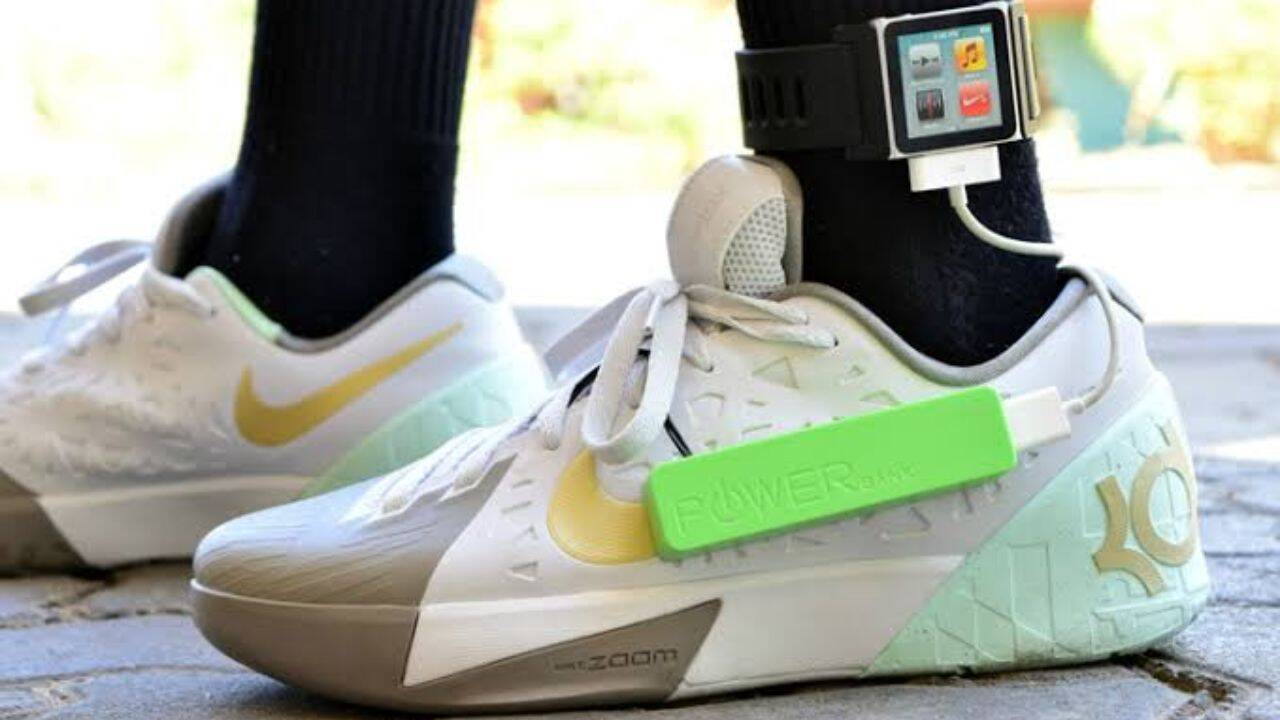
Image Credit: inhabitat.com
Which materials are suitable for capturing foot movement
Vesa Aho identifies four main groups of materials which includes single crystals, ceramics, polymers, and composites. The most common ceramic used is known as PZT, which is popular because it is affordable and highly effective at producing a charge. However, PZT is very rigid and brittle, meaning it can crack easily if the shoe bends too much. Furthermore, it contains lead, which is a toxic substance.On the other hand, there are polymers like PVDF(polyvinylidene fluoride), which are far more flexible and robust. These materials can easily be used into wearable items because they can bend and twist without breaking. But they produce much less electricity than the ceramic. Scientists are currently developing ‘composites’ to try and find a balance between flexibility and high power output.
Can Angelo’s shoes actually charge a smartphone
The award-winning essay for the Trust for Sustainable Living, notes that Casimiro’s prototype could fully charge a 400 mAh battery after roughly eight hours of jogging. This is a remarkable achievement for a teenager, but it also highlights an industrial challenge. Vesa Aho points out that most modern smartphones, such as an iPhone, have much larger battery capacities.At current power levels, which typically range from 1 to 10 milliwatts per step, it could take several days of continuous walking to fully charge a high-end phone. However, the technology is highly suitable for smaller devices like wearable health monitors, pedometers, and sensors that track your location.
How can this human energy be stored safely
Because the electricity produced by a footstep comes in short bursts, it cannot be used immediately. It must have a storage device. Traditionally, simple capacitors have been used for this purpose because they are easy to charge and discharge quickly. Unfortunately, they tend to lose their charge very fast through leakage. Some researchers suggest using rechargeable batteries, but these have limited lifespans and often contain hazardous chemicals.A modern solution discussed by Vesa Aho is the ‘supercapacitor’. These devices can store a large amount of energy like a battery and can also be charged and discharged multiple times without wearing out. This means that the energy generated during a morning run could be safely stored and used hours later.
How can young teenage inventors like Angelo revolutionise the energy sector
The current youth generation is innovative and capable enough to combat climate change. Energy harvesting is the process of capturing small amounts of power from the environment, such as heat, light, or movement, that would otherwise get wasted to the surrounding. This energy can extend the battery life in portable electronic gadgets or can fully power low-energy devices.By adopting innovations like energy-harvesting shoes, individuals can lower their carbon footprint. It might seem that walking by one person can’t have any large effect, but the collective impact of millions of people walking and generating their own clean energy would be massive. As the year 2030 comes closer, the ability to power our world through our own movement remains one of the most exciting prospects for a cleaner planet.