









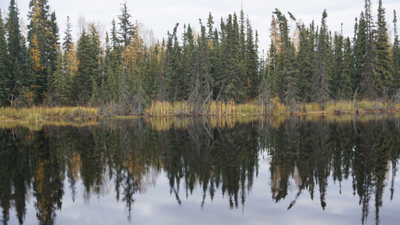
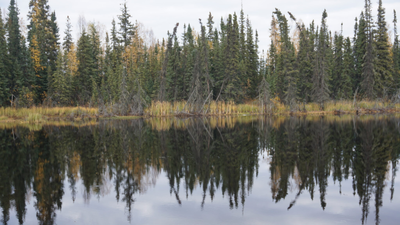
Thick green tree canopies across northern forests act as giant sunshields, keeping permafrost cool enough to hold 59 billion tonnes of carbon safely in the ground.The discovery reveals that the forest canopy reduces summer soil thawing by roughly one metre compared to open, treeless land. By shading the surface, boreal trees prevent vast amounts of ancient organic matter from rotting and leaking greenhouse gases into the air.The international study, published in Nature Climate Change, shows an essential natural service that standard climate models have long missed. Researchers from Humboldt University of Berlin, the Alfred Wegener Institute (AWI) in Potsdam, the University of Oslo, and Vrije Universiteit Amsterdam led the project.
Hidden carbon beneath the roots
For decades, environmental scientists measured the carbon stored in northern forests mainly by counting the wood, leaves, and roots of living trees. Living trees across frozen northern regions store between 7 and 19 petagrams (gigatonnes) of carbon in their wood and leaves.However, the team discovered that tree shade indirectly keeps 59 petagrams of carbon frozen in the soil below. That underground store equals nearly one-third of all the carbon locked inside forested permafrost soils.“One of the most important climate services provided by boreal forests lies beneath the trees. Their canopies keep permafrost cool and preserve carbon stocks that far exceed the carbon stored in the trees themselves. When the forest is lost, the ground loses this protection,” said Dr Simone Maria Stünzi, researcher at the Department of Geography at Humboldt University of Berlin and visiting researcher at AWI.
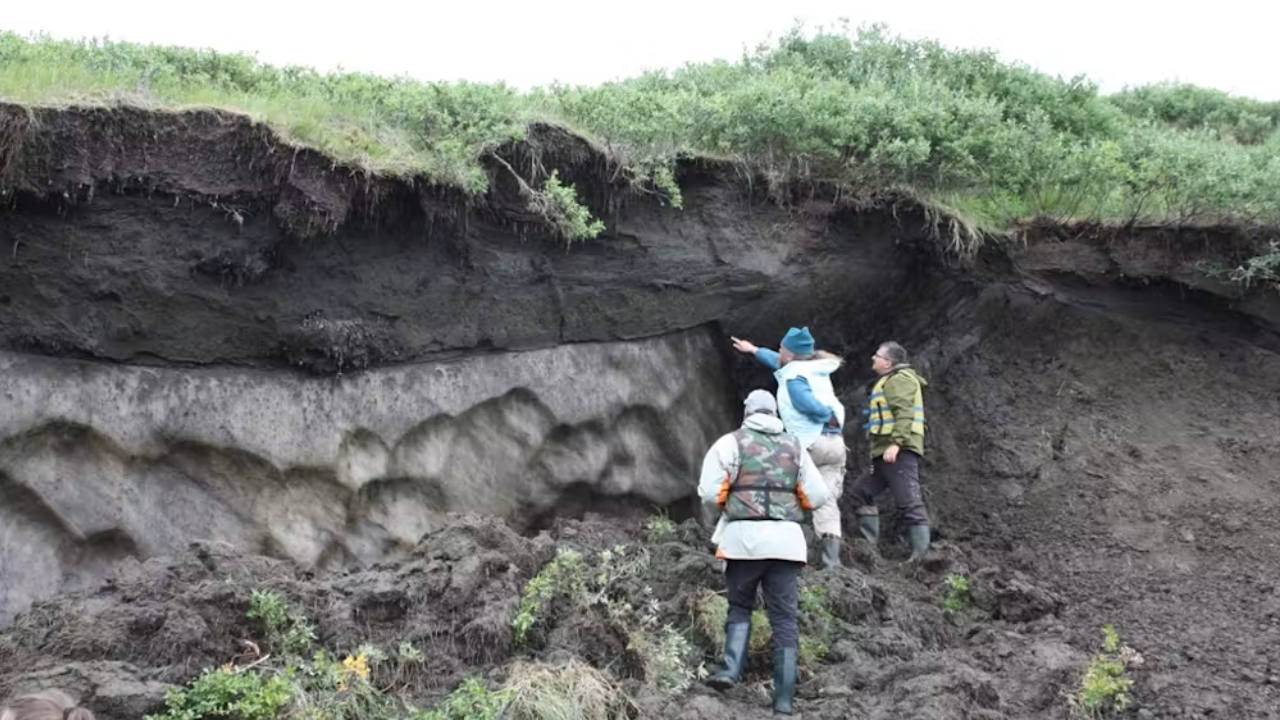
Frozen sediments in Chersky, Russia.
How tree shade blocks heat
To measure this cooling power, the research team combined satellite pictures, map data, and computer models across 16 northern regions. The models tracked how heat moves between the air, tree leaves, and frozen ground.Comparing shaded forest ground with open land showed that tree cover cuts summer melting depth by half or more. That difference keeps roughly one metre of soil frozen solid through the hottest months.Without tree shade, tiny soil microbes would start breaking down about 40 petagrams of freshly thawed carbon. As these microbes digest the dirt, they release carbon dioxide and methane, warming the planet even further.Earth scientist Moritz Langer of Vrije Universiteit Amsterdam, who helped design the study, noted that this finding fills a huge missing piece in global climate research.“We have identified a major gap in our understanding and quantification of the role of boreal forests in the global carbon cycle,” Langer explained. “This is particularly important because these forests are coming under increasing pressure due to rapid climate warming leading to increasing droughts and wildfires, which could fundamentally alter their ability to store carbon.”
Stopping the ground from collapsing
Besides slowing down thaw, tree leaves protect soil packed with underground ice from melting and collapsing.When icy ground thaws too fast, it creates sinkholes, landslides, and muddy lakes. The study estimates that tree cover shields another 19 petagrams of carbon from being washed away by these land collapses.Trees can grow back over a few decades after a fire or logging, but the carbon trapped in permafrost took thousands of years to build up after the last Ice Age. Once it thaws and leaks into the sky, it cannot be replaced in our lifetime.“59 petagrammes – that is, 59 gigatonnes – of carbon are currently stored in the permafrost solely as a result of the cooling effect of tree canopies – a climate-relevant quantity on a global scale. This makes the protection of these forests a climate issue of the utmost importance,” Stünzi said.Researchers warn that hotter weather, wilder forest fires, and tree cutting pose a double danger. Burning trees dumps carbon straight into the air and strips away the shade, causing the deep frozen ground below to melt.
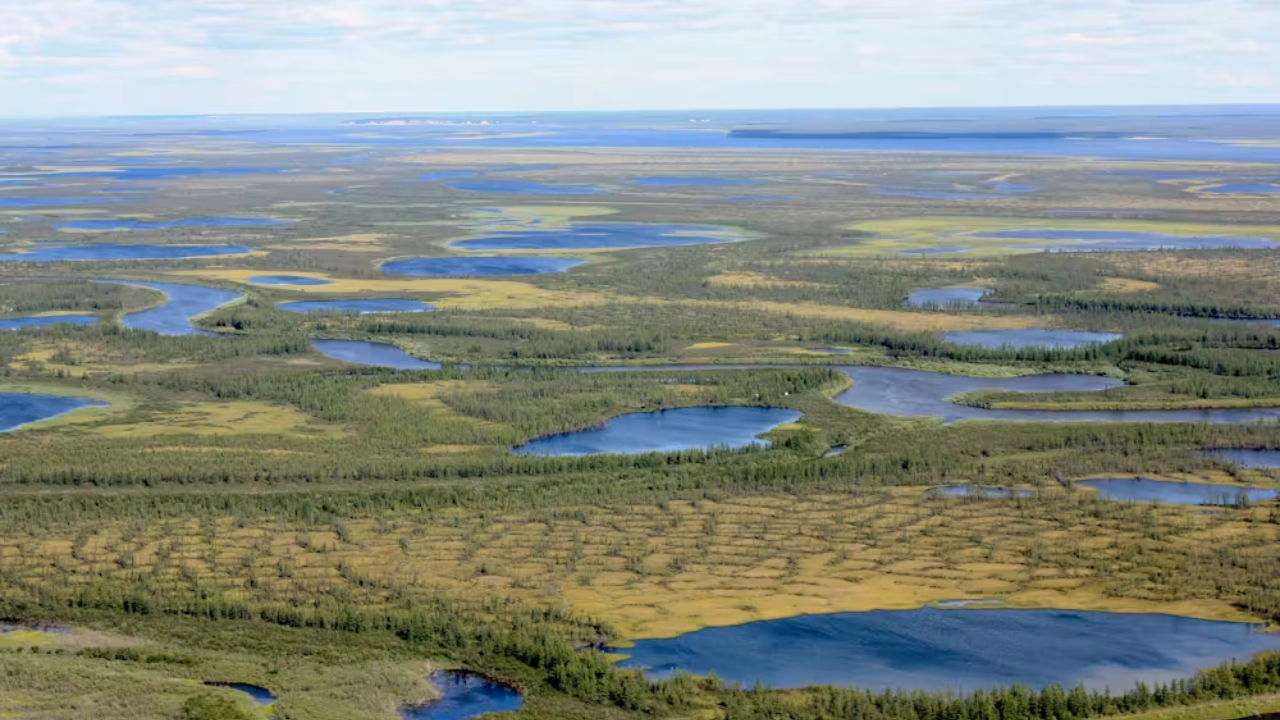
Inland waters such as wetlands, lakes, ponds, water-saturated soils and peatlands, play an important role in the net greenhouse gas balance of the permafrost region.
How the taiga affects world weather
The northern boreal forest, also called the taiga, stretches across Canada, Alaska, Scandinavia, and Russia, making up nearly thirty percent of all forest land on Earth. Because it circles the top of the globe, the way this forest handles heat directly shapes weather patterns for the entire Northern Hemisphere.When trees are cut down or destroyed by wildfires, the dark forest canopy disappears, exposing the ground to direct sunlight. At first, bare ground or snow reflects a bit more solar radiation back into space. However, as the dark soil absorbs summer heat without shade, the ground temperature quickly spikes, triggering rapid thaw in the permafrost below.This melting releases ancient, trapped organic matter that soil bacteria quickly digest, pumping vast amounts of methane and carbon dioxide into the air. This gas release creates a warming loop: higher temperatures melt more permafrost, which releases more gas, driving temperatures even higher. Protecting the taiga canopy acts as a crucial thermal brake, keeping this destructive warming loop from spiralling out of control.