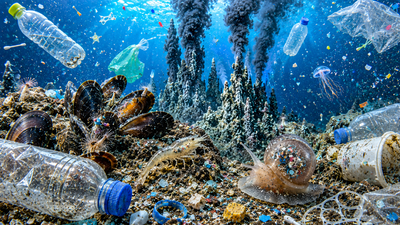









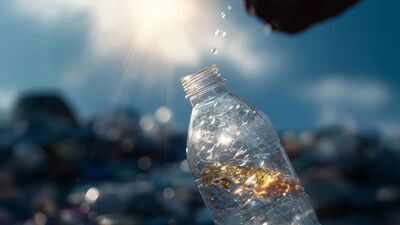
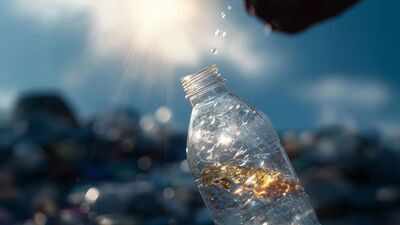
We live in a world where everything, from the blood running in our veins to the oceans spanning our planet, is polluted by plastic in one way or the other. We see mountains of plastic rubbish growing day-by-day. We are currently facing a massive environmental crisis as humanity produces over 460 million tonnes of plastic waste every year, yet less than 10% actually gets recycled, as per the UCLA newsroom website. Most of it ends up buried in landfills or polluting our beautiful oceans. At the same time, we are desperately searching for clean, zero-emission fuels to replace the oil and gas warming our world. A landmark study published in the Proceedings of the National Academy of Sciences (PNAS) and exciting new research from leading universities offers a unique solution that we can finally turn this ‘trash into treasure’ by converting mixed plastic waste into clean hydrogen fuel without the need for expensive sorting. This means that the mountain of plastic rubbish can someday be used as a high-output energy battery.
How does this newly discovered plastic-recycling process work
A team of researchers from UCLA and Ewha Womans University in South Korea has recently demonstrated a breakthrough method that could change everything. They have perfected a technique called ‘alkaline thermal treatment’ (ATT). Instead of trying to melt the plastic back into its original form, they use heat and a chemical helper called sodium hydroxide—a common substance often found in household drain cleaners—to break the plastic down at a molecular level.Think of a plastic bottle as a long, tangled necklace of carbon and hydrogen ‘beads’. Traditional methods try to untangle the necklace, which often breaks the beads and makes them less useful. The ATT process, however, uses the chemical helper to cut the necklace into tiny pieces, releasing high-purity hydrogen gas. This hydrogen is a ‘clean’ fuel because when you burn it, it produces only water vapour rather than smoke or greenhouse gases.
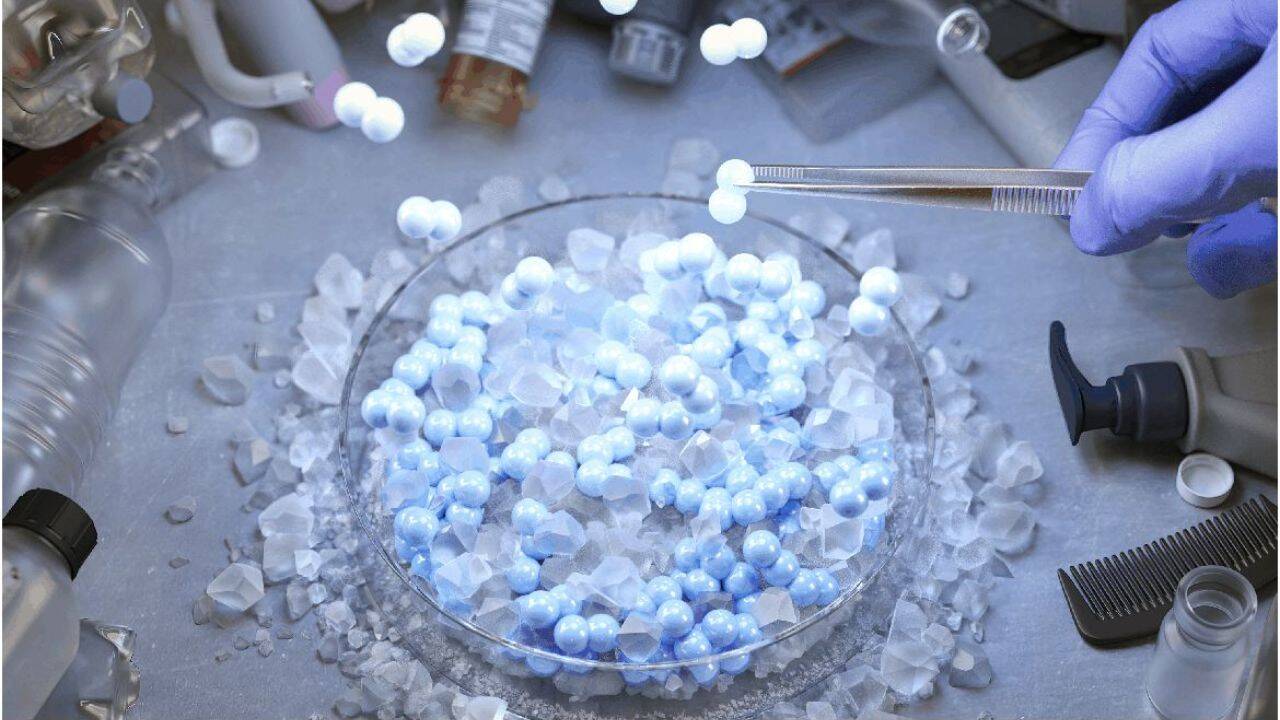
Image Credit: newsroom.ucla.edu
Why we can’t produce clean fuel from plastic using traditional recycling
If we look around our kitchen, we may find different types of plastic like the crinkly film on our vegetable tray, the rigid milk carton, and the soft lid of a reclosable plastic container. To a scientist, these are all completely different chemical structures. The biggest headache for our current recycling plants is that these different types of plastic cannot usually be processed together.In practice, our discarded plastics are often contaminated with food, adhesives, and dyes, or they are glued together in layers that are nearly impossible to separate. According to the UCLA website, sorting and cleaning these items is so laborious and expensive, that nearly 80% of our plastic waste is simply dumped into landfills, while another 12% is burned, which releases harmful carbon dioxide into the atmosphere. We are effectively burying and burning millions of tonnes of unused chemical energy.
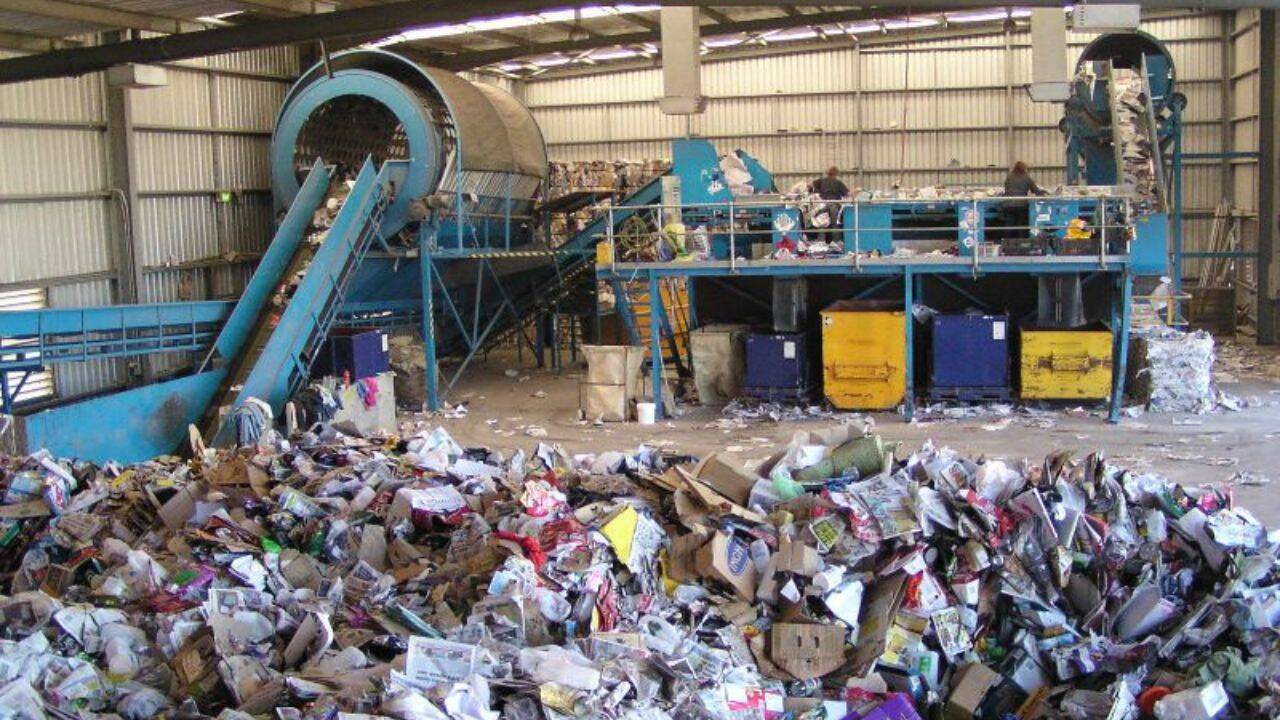
Image Credit: https://commons.wikimedia.org/w/index.php?curid=280199
Can we really skip the sorting of plastic waste using this new method
One of the most exciting aspects of the study published in the PNAS is that it works on a mixture of the three most common plastics found in our dustbins, the ‘PET (used for water bottles), PE (plastic bags), and PP (food containers).’ Previously, scientists struggled to process these together because they react differently with heat.To solve this, the researchers added a clever ‘pre-treatment’ step. They briefly expose the mixed plastic to mild heat and air, which adds oxygen to the plastic. This makes the plastics much more cooperative, allowing them all to decompose efficiently in a single reactor at temperatures much lower than before, thus saving a lot of energy. This means we could practically throw all our plastic waste into one machine and get clean fuel out the other side without the need for expensive sorting.
Where is the pollution from burning plastic going
You might be wondering that if we are breaking down plastic, which is made of carbon, doesn’t that carbon eventually turn into carbon dioxide (CO2)? This is where the PNAS study truly shines. In older methods, like burning plastic for energy, the carbon escapes into the sky as a greenhouse gas.In this new alkaline process, the carbon doesn’t escape. Instead, it reacts with the sodium hydroxide and gets ‘locked away’ as a solid mineral called sodium carbonate. This solid can then be easily turned into calcium carbonate (essentially chalk or limestone), which is used widely in the construction industry. By turning the waste into solid minerals, the process ensures that almost no carbon dioxide is released into the atmosphere during the reaction. It is a rare ‘win-win’ for the environment because we get rid of plastic waste, produce clean fuel, and trap the pollution before it ever leaves the factory.
Is this the end of plastic pollution
We are entering an era where our mountains of plastic trash are not a nuisance anymore. They are now the high-density energy batteries waiting to be tapped. By shifting to a ‘circular economy,’ where waste is recycled into clean fuel rather than being thrown away, we can protect our oceans and decarbonise our energy systems at the same time.Scientists agree that there is still work to be done to make these machines large enough to handle a whole city’s waste, but the foundational science is now a reality. Imagine your local council one day using a small, efficient plant to turn the neighbourhood’s weekly rubbish into the very hydrogen that powers the local buses. It’s a future where ‘rubbish’ is a word of the past, and every piece of plastic has the potential to become a clean, bright source of energy for the next generation.